
I’ve been seeing the same anti-pattern everywhere lately.
Someone opens Cursor, Copilot or Claude and pastes a giant prompt:

I’ve been seeing the same anti-pattern everywhere lately.
Someone opens Cursor, Copilot or Claude and pastes a giant prompt:

A common mistake we see: a business spends years trying to save money on IT by using a break-fix provider, only to get hit with a five-figure bill after a ransomware attack, outage, or compliance issue.
The reality is simple: IT is no longer just about fixing laptops and resetting passwords. Today, IT, cybersecurity, and compliance are tightly connected. If one fails, the others usually fail too.
For most small and midsize businesses, comprehensive managed IT services typically cost between $100–$175 per user per month.
Anything significantly cheaper often excludes critical capabilities such as:
The sticker price may look attractive, but the gaps often become expensive when something goes wrong.
Most businesses don’t lose money because IT support is expensive. They lose money because systems go down, employees stop working, customers are impacted, or data gets compromised.
A few hours of downtime can easily cost more than a year of proactive IT management.
The question is no longer “How much does IT cost?”
The better question is: “What is the cost of being unprotected?”
Many companies still buy IT support from one vendor and cybersecurity from another.
When an incident occurs, visibility is fragmented, response slows down, and accountability becomes unclear.
Modern businesses need a single team that can manage endpoints, monitor threats, respond to incidents, and maintain security controls continuously—not separate vendors pointing fingers at each other.
Frameworks such as CMMC 2.0, SOC 2, and ISO 27001 are no longer enterprise-only concerns.
For defense contractors, government suppliers, and companies selling into the enterprise market, compliance is increasingly required to win and retain business.
The traditional approach—consultants, spreadsheets, and manual evidence collection—is expensive and difficult to sustain. Continuous monitoring and automated evidence collection are becoming the only practical way to stay compliant year-round.
The most effective approach is an integrated service that combines IT operations, cybersecurity, and compliance under one roof.
That eliminates vendor gaps, reduces operational overhead, improves security posture, and makes compliance significantly easier to maintain.
At Espresso Labs, that’s exactly how we operate.
We serve as a virtual IT, security, and compliance team, delivering enterprise-grade capabilities without requiring businesses to build an internal department or coordinate multiple vendors.
For most growing SMBs, the goal isn’t finding the cheapest IT provider. It’s finding a partner that prevents downtime, reduces risk, and helps the business scale securely.

I recently joined the MSP 1337 podcast with Chris Johnson to talk about something I’ve been thinking about for years:
Small and midsize businesses are being asked to operate with enterprise-level security expectations — without enterprise-level resources.
That gap is becoming impossible to ignore.
And AI is accelerating both sides of the problem.
Attackers are moving faster.
Infrastructure is becoming noisier.
Compliance requirements are multiplying.
Meanwhile, SMBs and MSPs are still expected to somehow manage everything with limited staff, fragmented tools, and endless alerts.
That model is cracking.
Btw, you can listen to it here:
– Apple Podcasts
– Spotify

I recently had a conversation on The Changelog, and it reinforced something I’ve seen over and over again:
SMB cybersecurity isn’t just hard — it’s structurally broken.
Not because people don’t care.
Not because tools don’t exist.
Because the entire model assumes resources that SMBs simply don’t have.
Security today is designed for enterprises and downsized for everyone else.
That doesn’t work.
Enterprise model:
SMB reality:
So what happens?
They install more tools…generate more alerts…and end up less certain about their security posture.
That’s the paradox.

There’s a new ransomware playbook.
It doesn’t try to evade your security tools.
It just kills them.
Attackers are using BYOVD (Bring Your Own Vulnerable Driver):
No alerts. No resistance. Just silence.
From there, encryption is trivial.
This is already being packaged into single payloads:
break in → disable security → encrypt
All in one move.
Execution time: minutes, not days.
The uncomfortable truth:
“We have EDR” is no longer a security strategy.
Attackers don’t need to bypass your defenses anymore.
They just turn them off.

Manufacturing is no longer “just” physical.
Your CNC machine talks to a Windows box.
That Windows box talks to email.
Email talks to the internet.
And the internet talks back.
Ransomware targeting manufacturing jumped 61% heading into 2026. That’s not abstract.
That’s a shift supervisor staring at frozen screens at 4:12am while production bleeds cash by the minute.
If you run a mid-market plant, here’s the uncomfortable truth: you probably don’t have a 24/7 security team. You probably have one IT person juggling printers, patches, Wi-Fi complaints, and compliance spreadsheets. And you definitely don’t have time for a cyber incident.
That’s why manufacturers are moving to EspressoLabs.
Not because it’s trendy.
Because it works.
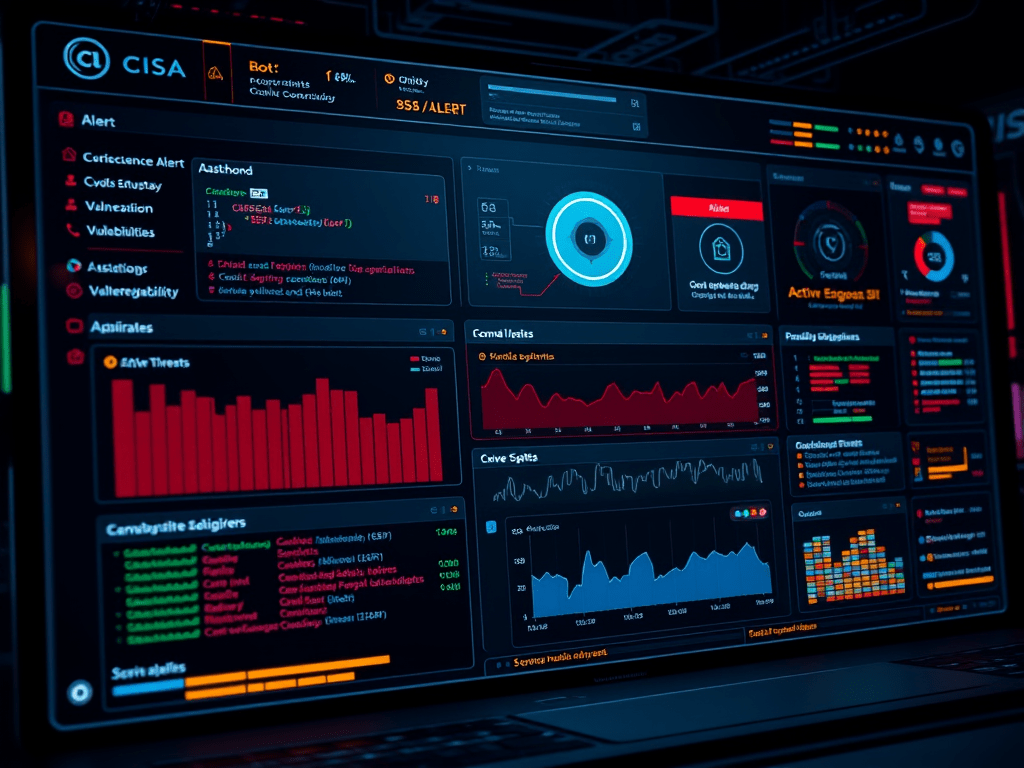
Here’s a boring truth:
Cybersecurity and Infrastructure Security Agency publishes critical cybersecurity advisories.
Here’s a less comfortable truth:
Most teams never check them.
CISA maintains the Known Exploited Vulnerabilities (KEV) catalog. These are not “theoretical risk under certain lab conditions” bugs. These are vulnerabilities attackers are actively exploiting in the wild, right now, against real systems.
When something lands in KEV, it’s not a polite suggestion. It’s a flare in the sky that says: patch this, or prepare for visitors.
And yet—no one wakes up thinking, “Before coffee, let me refresh a federal website.”
We’re building product.
We’re shipping features.
We’re arguing in Slack.
We’re trying to remember where that one Terraform variable is defined.
So I built a bot that does the refreshing for us.
Continue reading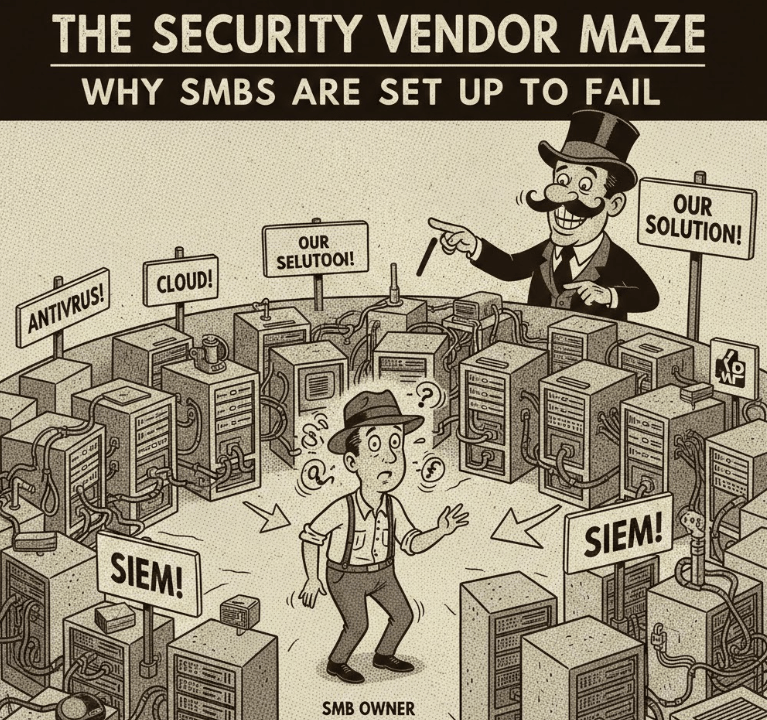
A founder asked me recently a simple question:
“How many security tools do we actually need to be protected like an enterprise?”
I gave him the honest answer.
Six to ten different platforms. Minimum.
There was a pause.
Then his face dropped.
Because in that moment, he realized what many SMB founders eventually discover the hard way: modern cybersecurity was never designed for companies like theirs.
Continue reading
If you’re working at a startup or SMB, you might think “we’re too small to be targeted.” You might believe that cyber attackers only go after Fortune 500 companies with deep pockets and valuable data worth millions.
That assumption could destroy your business.
Here’s the uncomfortable truth: attackers don’t discriminate by company size.
They discriminate by vulnerability.
And right now, small and medium-sized businesses represent the softest, most lucrative targets in the entire threat landscape.
Here are the top 5 things you should do.
Right now.

Web security is a critical concern for any backend developer. If you’re building applications using Node.js and Express, it’s essential to safeguard your backend against common security threats such as SQL injections, cross-site scripting (XSS), cross-site request forgery (CSRF), and other vulnerabilities. This comprehensive guide explores these attacks in depth and demonstrates best practices to prevent them with practical coding examples.
Continue reading Ido Green