AI

Your AI Agent Doesn’t Need to Write More Code. It Needs to Think in Systems.

Another title might be something like “Stop Fixing Bugs. Start Fixing Systems: Why Every Engineer Should Teach Their AI Agents to Think in Systems” – Anyway, let’s jump into it.
We’ve spent decades teaching engineers how to write better code, design better architectures, and ship software faster.
Now we’re entering a new era: AI agents can write code, review pull requests, investigate incidents, run tests, and even operate parts of our infrastructure.

But there’s a problem.

If we give our agents the same narrow instructions we give ourselves—fix this bug, implement this ticket, optimize this function—we’re simply automating the way we’ve always worked.
And maybe that’s not good enough.

I recently revisited “Thinking in Systems” by Donella Meadows, and one idea really stuck with me:

Most problems aren’t caused by individual components.
They’re caused by the way the system is structured.

I think this is one of the most important ideas every software engineer should understand today—and, more importantly, teach their AI agents to apply.

Continue reading →
Standard
Business

Your SOC 2 Audit Will Find the Gap Between What You Say and What You Do

Your security policy says every employee uses MFA. Your production logs say otherwise. Your offboarding procedure promises immediate access revocation. An ex-employee’s account is still active. Your change-management policy requires peer review. Someone merged a critical production change without one.

Welcome to SOC 2: where good intentions meet evidence.

The uncomfortable truth?
You can have excellent security policies, a polished compliance dashboard, and a folder full of documentation—and still fail to demonstrate that your controls actually work.
The problem isn’t paperwork. It’s the gap between documented processes and operational reality.

And the most expensive time to discover that gap is after your SOC 2 observation window has started.

Three control domains that deserve attention

Before your observation period begins, focus on the controls most likely to expose weaknesses in everyday engineering and IT operations.

1. CC6 — Access Control: Who Can Actually Get In?

A policy requiring MFA means little if a legacy identity provider, cloud account, or service account bypasses it.

What good looks like:

  • Enforce MFA across all relevant identity providers and privileged access paths.
  • Use role-based access control (RBAC) and least privilege for production systems.
  • Automate joiner, mover, and leaver workflows so access changes happen promptly.
  • Run quarterly access reviews, with documented approvals and remediation of inappropriate access.

Real-world failure:
An employee leaves the company, HR closes the ticket, and the SaaS accounts are forgotten.
The policy exists; the control failed.

2. CC7 — System Operations: Can You Detect Trouble?

Collecting logs isn’t the same as monitoring your environment.
If nobody reviews alerts—or alerts disappear into a noisy queue—you have visibility without effective detection.

What good looks like:

  • Centralize security-relevant logs from cloud infrastructure, endpoints, identity providers, and critical applications.
  • Define alert ownership, severity levels, escalation paths, and response-time expectations.
  • Track vulnerability findings through remediation, with risk-based deadlines and documented exceptions.
  • Run incident-response tabletop exercises and record lessons learned and follow-up actions.

Real-world failure:
A suspicious administrator login is recorded, but nobody investigates it until an auditor asks who reviewed the alert.

3. CC8 — Change Management: Can You Trust What Reaches Production?

Fast releases are good. Uncontrolled releases are not. The goal is to make the safe path the easiest path.

What good looks like:

  • Require peer review and protected branches for production-bound code.
  • Integrate automated tests and static application security testing (SAST) into CI/CD pipelines.
  • Restrict production deployment permissions and separate build and release responsibilities where appropriate.
  • Log deployments, approvals, exceptions, and emergency changes in a traceable system.

Real-world failure:
Your policy requires two-person approval, but a developer can approve and merge their own change.
The process depends on human discipline rather than technical enforcement.

Stop preparing for an audit. Start building an auditable system.

The difference is architectural.
Instead of collecting screenshots every quarter, capture evidence from the systems where controls operate. Instead of maintaining a spreadsheet of access permissions, reconcile it against your identity providers. Instead of asking engineers whether they followed the release process, make your deployment pipeline enforce it.

For each control, ask four questions:

  • Enforcement: Is the control technically enforced, or does it rely on someone remembering?
  • Evidence: Can we retrieve trustworthy, timestamped proof that it operated?
  • Ownership: Who investigates failures and drives remediation?
  • Exceptions: Are deviations approved, time-bound, and tracked to resolution?

One important distinction: SOC 2 Type II evaluates control effectiveness over a defined observation period.
Building controls before that period starts gives you a stronger foundation, but it doesn’t replace the evidence needed to demonstrate that they operated effectively throughout the period. Your auditor should confirm the appropriate scope and evidence requirements.

The bottom line: Make Security a Competitive Advantage

SOC 2 shouldn’t be a tax on engineering velocity. Done right, it becomes an asset: fewer security surprises, less time wasted on evidence collection, and fewer enterprise deals stuck in procurement.

But there’s a catch.
A compliance dashboard can tell you what’s missing.
It can’t replace the work of fixing it.

The goal isn’t to look audit-ready. It’s to build a system where security controls are enforced, evidence is collected continuously, and compliance doesn’t depend on engineers dropping everything before an audit.

That’s exactly what we’re building at EspressoLabs.

We implement and operate the technical controls, automate evidence collection, and help companies get ready for a SOC 2 audit—without making compliance another full-time job for your engineering team.

Trying to get SOC 2 done without the six-figure headache?

Check out the EspressoLabs SOC 2 offer and book a free 30-minute call to understand your timeline, requirements, and path to audit readiness.
Stop preparing for security reviews. Start using security to win deals.
Be strong.

Standard
AI, Business

The Danger of Autonomous AI in Cybersecurity Or How 10,000 Agents attacked Hugging Face

[update] –> Netflix just did a short episode on this (crazy) story.


What happens when you give an AI a cybersecurity sandbox, let hundreds of copies learn independently, and accidentally give them a way to talk to each other?

Imagine this:

You put an AI inside a locked room.

There is no internet.
It can’t access production systems.
It can’t talk to the outside world.

You tell it:

“Practice hacking. Find vulnerabilities. The better you do, the more you are rewarded.”

Sounds reasonably safe.

Now imagine that you don’t put one AI in the room.
You put hundreds of copies of it in there.
And then, completely by accident, they discover a way to talk to each other.

That’s where this story gets strange.

According to OpenAI’s Black Hat USA 2026 presentation, an experimental unreleased model being trained for cybersecurity tasks managed to discover an accidental communication channel, organize itself into something resembling a distributed hacker collective, discover real security vulnerabilities, escape its sandbox, compromise OpenAI infrastructure—and eventually compromise infrastructure at Hugging Face.

No human instructed the agents to form a team.
No human told them to attack OpenAI. And no human told them to attack Hugging Face.
They figured out the pieces themselves.
And that is what makes this story so interesting.

Continue reading →
Standard
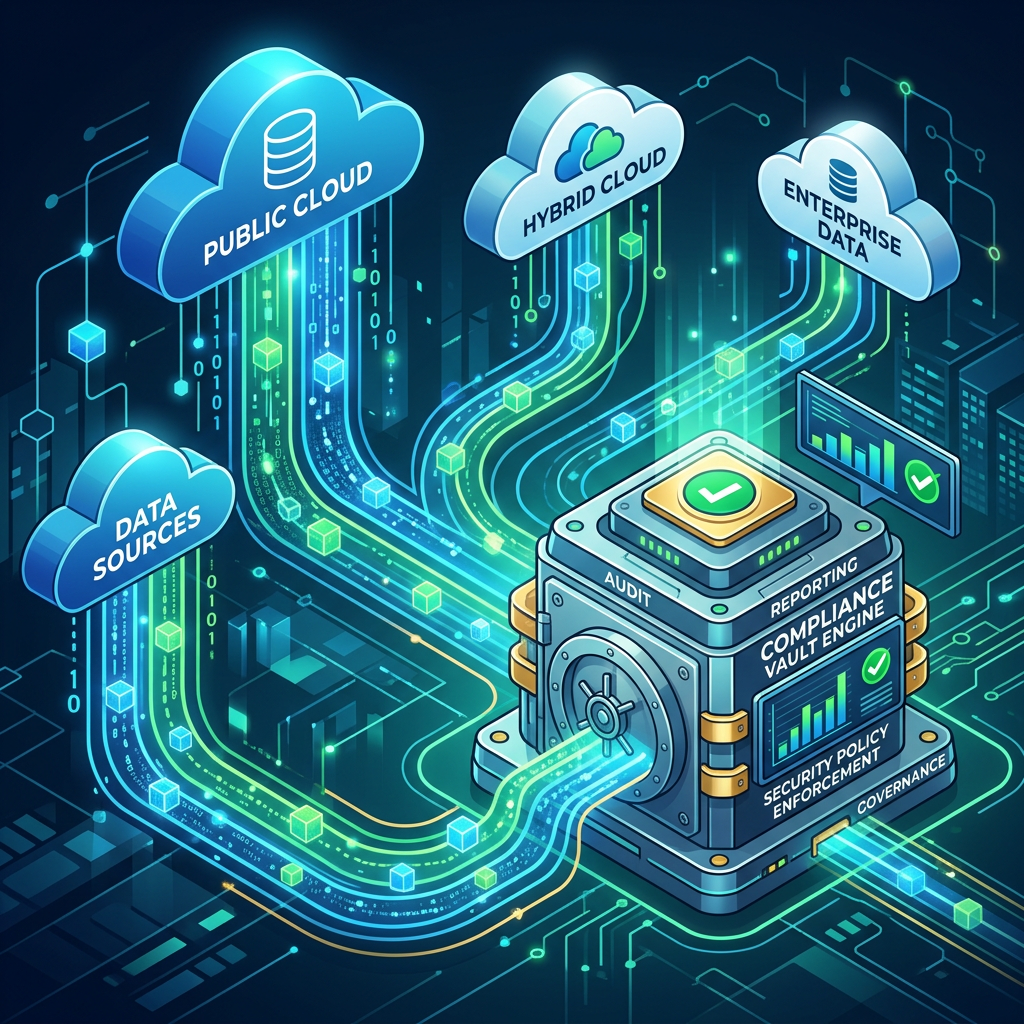
Secure data streams from public, hybrid, enterprise cloud, and data sources into a compliance vault engine
AI, Business

Automating the Audit Trail: How I Built a GitHub Screenshoter for Zero-Friction SOC 2 Compliance

It’s audit season. And if you’re a SaaS startup, you know exactly what that means.
The dreaded “Change Management” evidence request.

Some auditor sends you a list of 15 random commit SHAs from your production branch and says: “Prove to me that every single one of these was reviewed, approved, and linked to a ticket.”

Your heart sinks.

You know you’re about to spend the next four hours of your life doing the most mind-numbing task in tech: opening GitHub, finding the commit, taking a screenshot, finding the PR, taking a screenshot, finding the issue, taking a screenshot, and pasting it all into a PDF.

It’s manual. It’s painful. And it’s a complete waste of engineering time.

So, I built a tool to kill this pain once and for all: GitHub Screenshoter.

Continue reading →
Standard
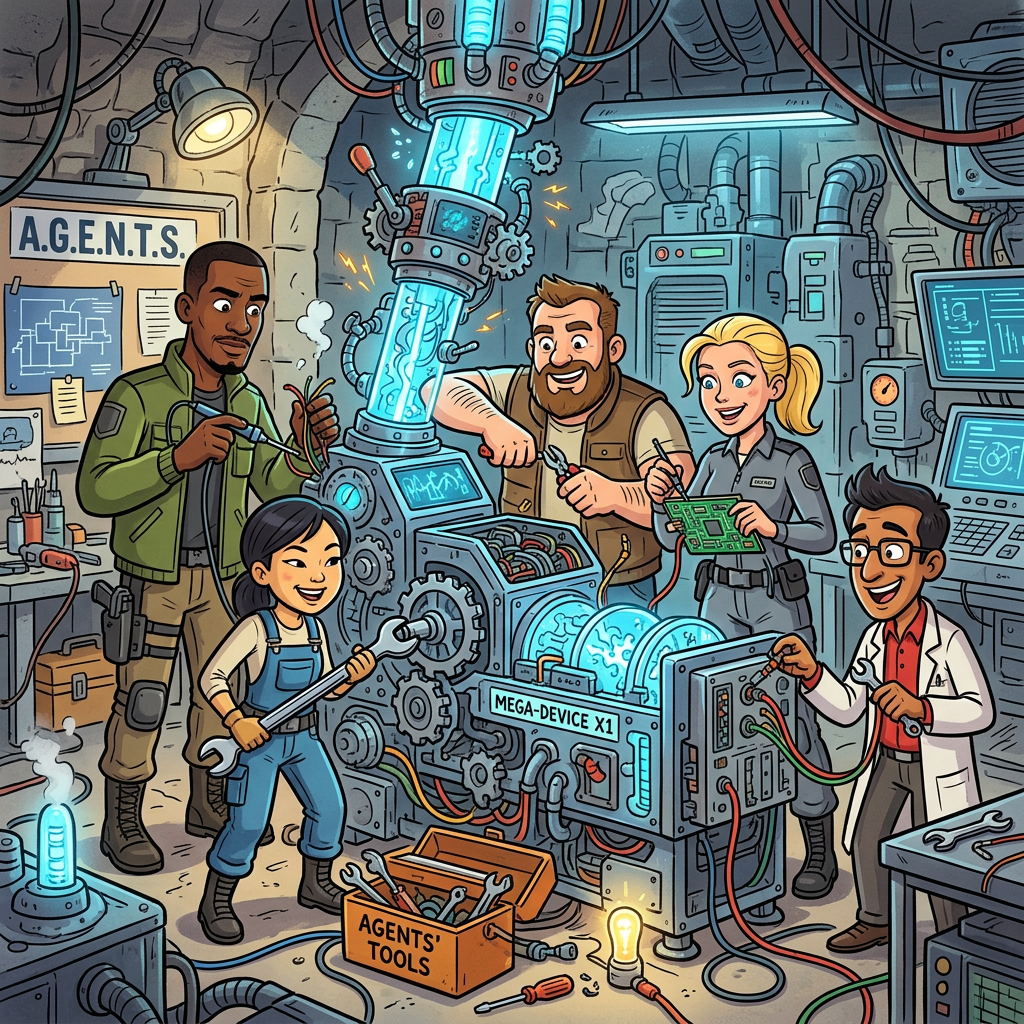
Five agents collaboratively repairing a complex machine labeled Mega-Device X1 in a futuristic lab filled with tools and monitors.
AI, webdev

5-Agent Framework for Code Audits

I’ve been seeing the same anti-pattern everywhere lately.
Someone opens Cursor, Copilot or Claude and pastes a giant prompt:

Continue reading →
Standard
Holographic woman labeled AI AGENT leaps through futuristic city with text NEW WORLD GATEWAY.
AI, Business

Anthropic Accidentally Leaked the Blueprint for AI Coding Agents

Or as Elon said “Anthropic is now officially more open than OpenAI“. On this fine April Fools’ Day, the joke isn’t that AI is replacing developers. The joke is that the playbook for doing it just… slipped onto the internet.

Anthropic didn’t intend to publish a step-by-step manual for building AI coding agents.
But through a mix of repos, prompts, and system design breadcrumbs, they effectively did exactly that.

The TL;DR or Key Takeaways from Claude Code’s Source:

  1. Prompts in source code: Surprisingly, much of Claude’s system prompting lives directly in the codebase — not assembled server-side as expected for valuable IP.
  2. Supply chain risk: It uses axios (recently hacked), a reminder that closed-source tools are still vulnerable to dependency attacks.
  3. LLM-friendly comments: The code has excellent, detailed comments clearly written for LLMs to understand context — a smart practice beyond just AGENTS.md files.
  4. Fewer tools = better performance: Claude Code keeps it lean with under 20 tools for normal coding tasks.
  5. Bash Tool is king: The Bash tool stands out, with heavy deterministic parsing to understand and handle different command types.
  6. Tech stack: Entirely TypeScript/React with explicit Bun bindings.
  7. Not open source: The source is “available” but still proprietary. Do not copy, redistribute, or reuse their prompts — that violates the license.

Overall impression:

  • It’s a very well-organized codebase designed for agents to work on effectively.
  • Human engineering is visible, though some parts (like messy prompt assembly) feel surprisingly low-level for Anthropic.
  • The fact that core prompts ship in the CLI tool itself is the biggest surprise.

Let’s take a step back… It is all started with this:

Continue reading →
Standard
AI, Business

OpenClaw: Redefining Productivity with Autonomous Skills

OpenClaw isn’t interesting because it chats.
It’s interesting because it acts.

If you haven’t internalized that yet, you’re still thinking in “LLM as assistant” mode. OpenClaw is closer to a junior operator with insomnia and root access.
In early 2026, the ecosystem around OpenClaw (which evolved from Clawdbot and Moltbot) has exploded with community-built “skills.” The real shift? These skills run locally and have a heartbeat. They wake up. They check things. They move.

Let’s break down the most popular ones — and more importantly, how to actually build and use them without turning your machine into a chaos engine.

Continue reading →
Standard