Your security policy says every employee uses MFA. Your production logs say otherwise. Your offboarding procedure promises immediate access revocation. An ex-employee’s account is still active. Your change-management policy requires peer review. Someone merged a critical production change without one.
Welcome to SOC 2: where good intentions meet evidence.
The uncomfortable truth?
You can have excellent security policies, a polished compliance dashboard, and a folder full of documentation—and still fail to demonstrate that your controls actually work.
The problem isn’t paperwork. It’s the gap between documented processes and operational reality.
And the most expensive time to discover that gap is after your SOC 2 observation window has started.
Three control domains that deserve attention
Before your observation period begins, focus on the controls most likely to expose weaknesses in everyday engineering and IT operations.
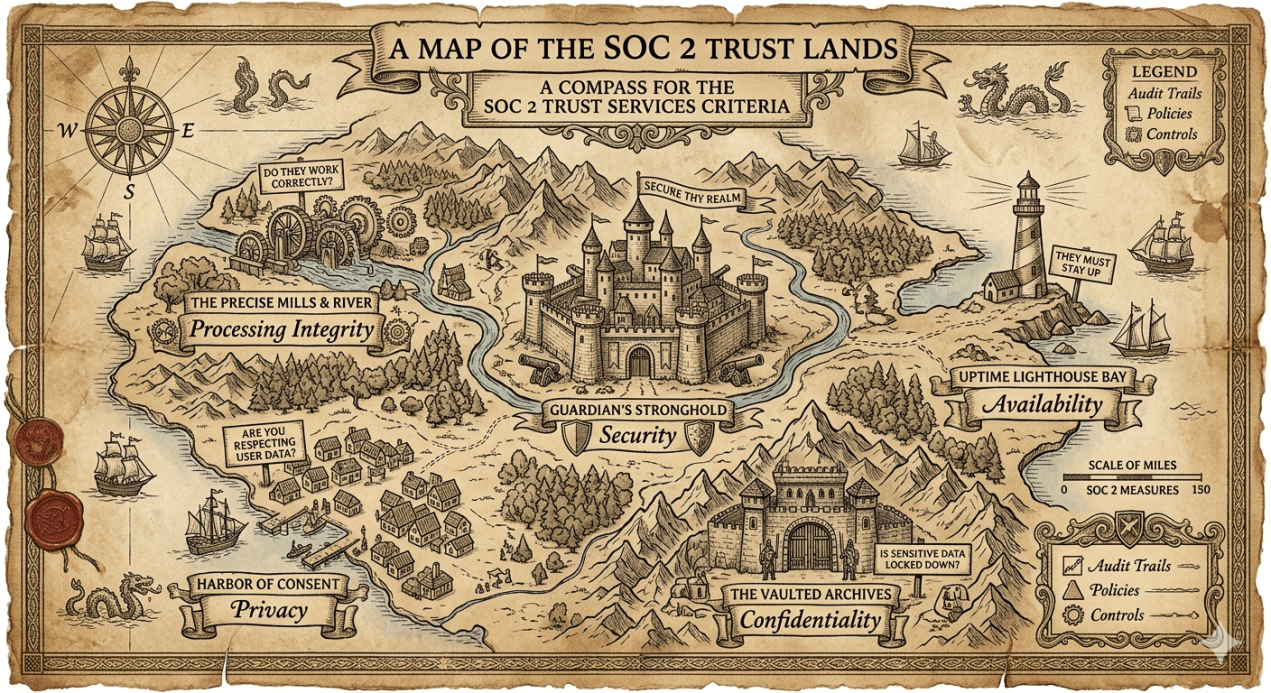
1. CC6 — Access Control: Who Can Actually Get In?
A policy requiring MFA means little if a legacy identity provider, cloud account, or service account bypasses it.
What good looks like:
- Enforce MFA across all relevant identity providers and privileged access paths.
- Use role-based access control (RBAC) and least privilege for production systems.
- Automate joiner, mover, and leaver workflows so access changes happen promptly.
- Run quarterly access reviews, with documented approvals and remediation of inappropriate access.
Real-world failure:
An employee leaves the company, HR closes the ticket, and the SaaS accounts are forgotten.
The policy exists; the control failed.
2. CC7 — System Operations: Can You Detect Trouble?
Collecting logs isn’t the same as monitoring your environment.
If nobody reviews alerts—or alerts disappear into a noisy queue—you have visibility without effective detection.
What good looks like:
- Centralize security-relevant logs from cloud infrastructure, endpoints, identity providers, and critical applications.
- Define alert ownership, severity levels, escalation paths, and response-time expectations.
- Track vulnerability findings through remediation, with risk-based deadlines and documented exceptions.
- Run incident-response tabletop exercises and record lessons learned and follow-up actions.
Real-world failure:
A suspicious administrator login is recorded, but nobody investigates it until an auditor asks who reviewed the alert.
3. CC8 — Change Management: Can You Trust What Reaches Production?
Fast releases are good. Uncontrolled releases are not. The goal is to make the safe path the easiest path.
What good looks like:
- Require peer review and protected branches for production-bound code.
- Integrate automated tests and static application security testing (SAST) into CI/CD pipelines.
- Restrict production deployment permissions and separate build and release responsibilities where appropriate.
- Log deployments, approvals, exceptions, and emergency changes in a traceable system.
Real-world failure:
Your policy requires two-person approval, but a developer can approve and merge their own change.
The process depends on human discipline rather than technical enforcement.
Stop preparing for an audit. Start building an auditable system.
The difference is architectural.
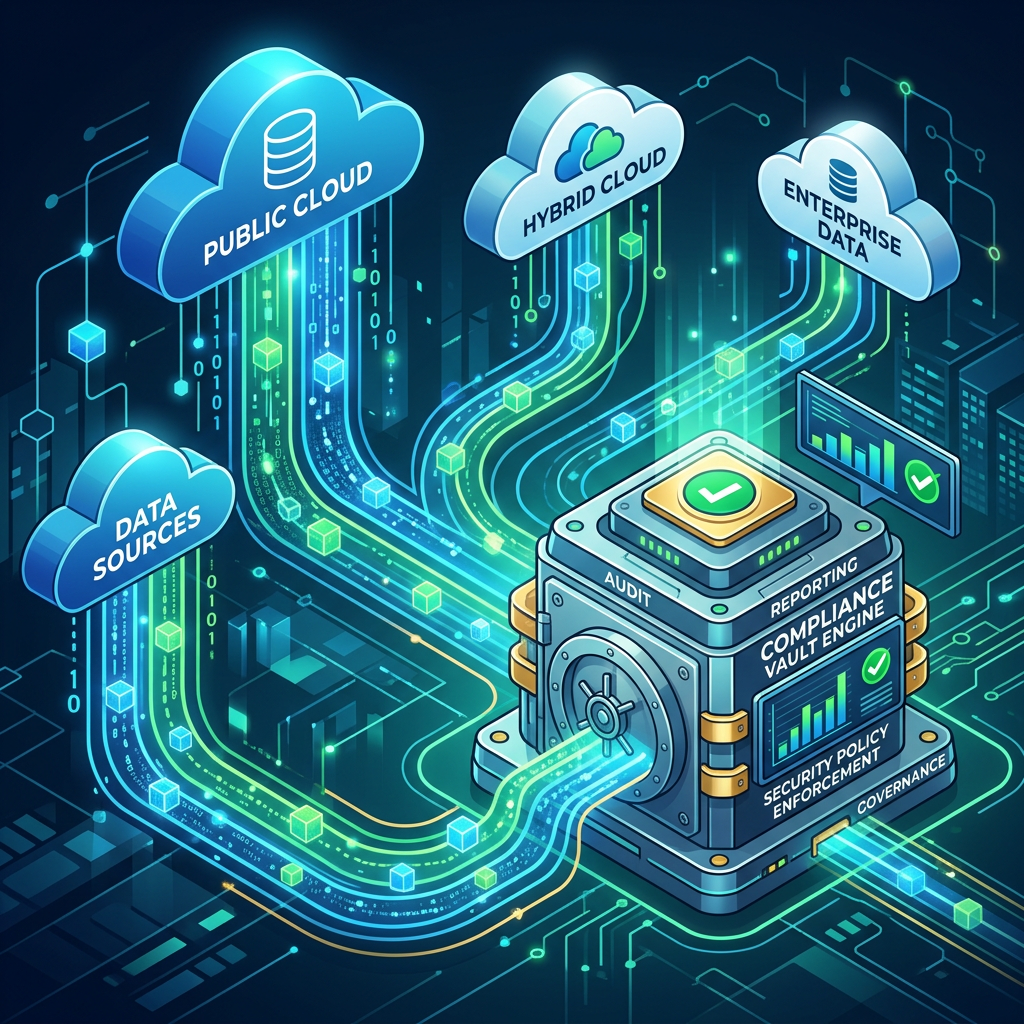
Instead of collecting screenshots every quarter, capture evidence from the systems where controls operate. Instead of maintaining a spreadsheet of access permissions, reconcile it against your identity providers. Instead of asking engineers whether they followed the release process, make your deployment pipeline enforce it.
For each control, ask four questions:
- Enforcement: Is the control technically enforced, or does it rely on someone remembering?
- Evidence: Can we retrieve trustworthy, timestamped proof that it operated?
- Ownership: Who investigates failures and drives remediation?
- Exceptions: Are deviations approved, time-bound, and tracked to resolution?
One important distinction: SOC 2 Type II evaluates control effectiveness over a defined observation period.
Building controls before that period starts gives you a stronger foundation, but it doesn’t replace the evidence needed to demonstrate that they operated effectively throughout the period. Your auditor should confirm the appropriate scope and evidence requirements.
The bottom line: Make Security a Competitive Advantage
SOC 2 shouldn’t be a tax on engineering velocity. Done right, it becomes an asset: fewer security surprises, less time wasted on evidence collection, and fewer enterprise deals stuck in procurement.
But there’s a catch.
A compliance dashboard can tell you what’s missing.
It can’t replace the work of fixing it.
The goal isn’t to look audit-ready. It’s to build a system where security controls are enforced, evidence is collected continuously, and compliance doesn’t depend on engineers dropping everything before an audit.
That’s exactly what we’re building at EspressoLabs.
We implement and operate the technical controls, automate evidence collection, and help companies get ready for a SOC 2 audit—without making compliance another full-time job for your engineering team.
Trying to get SOC 2 done without the six-figure headache?
Check out the EspressoLabs SOC 2 offer and book a free 30-minute call to understand your timeline, requirements, and path to audit readiness.
Stop preparing for security reviews. Start using security to win deals.
Be strong.