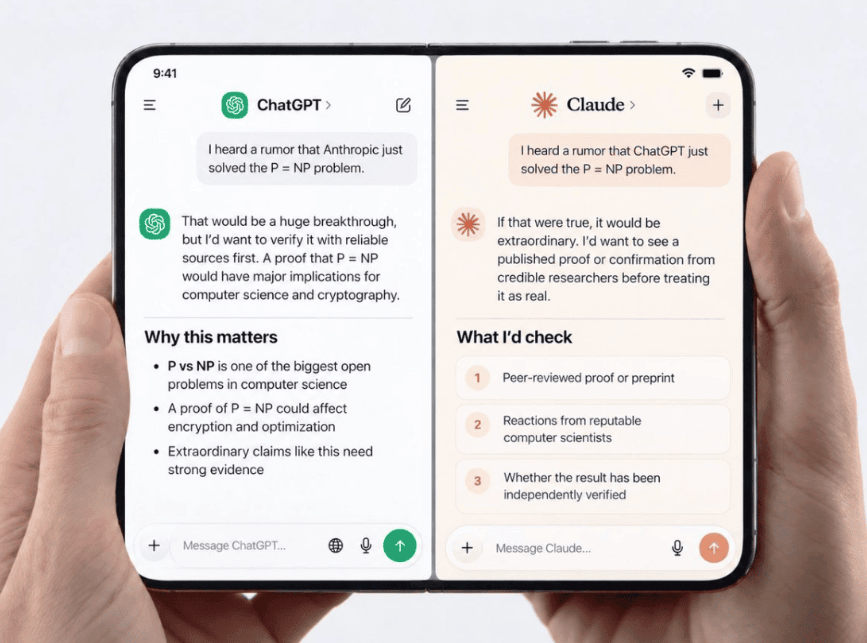

A practical follow-up to “The Power of Many”—from a small Ollama experiment to a workbench for comparing local and cloud LLMs.
A couple of years ago (2024… but it feels like 217 years ago in the AI world), I wrote about an idea that felt slightly unusual at the time: why settle for one large language model when you can ask several?
The argument was straightforward. Different models have different strengths. One might be better at explaining a tricky concept, another at writing code, and a third at spotting the holes in an otherwise convincing answer. Asking more than one model gives you something a single answer cannot: a comparison.
That was the idea behind my little open-source project, Multi-LLM-at-Once.
The original version was modest. It queried local models through Ollama and displayed their answers together. Useful, but still very much an experiment.
Since then, the experiment has become a rather more serious tool.
The question is no longer “Which model is best?”
This is where I think many of us are asking the wrong question.
Continue reading