
 Last week I had the pleasure to take part in the first HTML5-IL meetup. If you are a front-end developer that live in Israel you should try and come to this group events. Lots of great developers, designers and others that share the same passion for the web. Great stuff. Unfortunately I didn’t have more then 30min for this new, hot, complicated topic. So I hope to have more time to cover some of the aspects during the next meetup. From the four main aspects we touched only on the first two: Continue reading
HTML5 APIs At Google Developer Group Haifa (Hebrew)
 It was the first meeting of GDG Haifa at the technion. I gave the first talk about HTML5 (new) APIs that front-end developers should leverage. It was a good kick-off event and it seems that this group will produce many more quality events. You can check the demos and the slide at my project site.
Enjoy.
UX Drinking Game On Google Developers Live Israel (Hebrew)
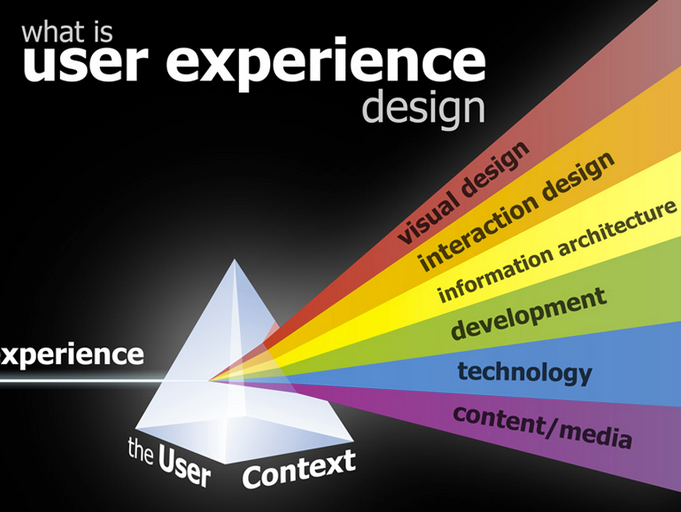
Last week we have a great talk in Campus TLV during our work with startups. This time is was in hebrew… on UX and how startups should think on their MVP and the UX of it.
Enjoy.
Web Components On Google Developers Live Israel (Part 2)
 Today, I covered web components a bit deeper then the last episode. Since it’s a new, hot, complicated and fun topic it should get more time, right? There are four main pieces that provide this technology. We touched only the first two. We spoke about templates (define a piece of markup that are inert but can be activated for use later). Think on a new object you are using out of your class definition. Then, we spoke about decorators – which apply templates to let CSS affect rich visual and behavioral changes to documents. Both ‘Custom elements‘ and ‘Shadow DOM’ will be on the next episode. Continue reading
GDL IL – HTML5 Game (In Hebrew)
 This week in Google Developers Live Israel, we talked with Mor from zloof.co.il about his new HTML5 game that is ‘conquering’ new gamers in Israel. There are many demos that show us the power of the web and its readiness for gamers. We covered some of the aspects that might interest developers who wish to build their first HTML5 game. We spoke about IDEs (sublime text 2, eclipse, web storm, netbean), tools, Model-View frameworks and learn a bit from Mor’s experience. Continue reading
Building Better Mobile Web Apps
 When we thinking on web apps and specially mobile web apps, we wish to make them smooth a responsive as possiable. The main problem is latency/network and luckily we have enough APIs in HTML5 to make sure we can achieve this goal. A good recent example is fastbook (yep… just like facebook but working FAST with HTML5). Here I’ll summaries some of the main points you wish to pay attention when you building your next amazing mobile web app. Start with ‘offline first’ (after all, you are on the right path with ‘mobile first’ already).
Coding
Offline First
- You should store all the main assets of your application. There are several APIs you can use:
- AppCache – for the main index.html page and all your JS, CSS code. You could also use it for images and other static data.
- Filesystem – You have an option to work with files: text and binary data. This is a great option for cases where you have a lot of images/mp3/videos etc’. In order to manage the work with files there is a great library – filer.js
- Storing state/data:
- localStorage – in
mostall mobile browsers. But it’s sync and give you only a simple key-value api. Continue reading
- localStorage – in
2012 Year Summary – This Blog, Books And Running
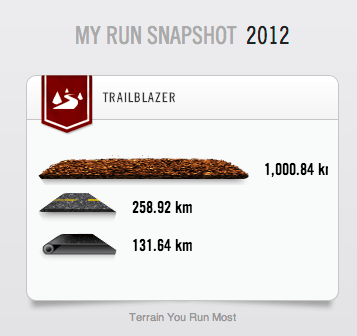
This year I have covered a bit more then 1000 miles. Here are some of the stats that nike site is giving you. First you can see I run mostly off-road This is great not only due to the amazing views but also because it’s quite and give you a chance to think without any ‘city’ noise around.
Web Components On Google Developers Live Israel (Part 1)
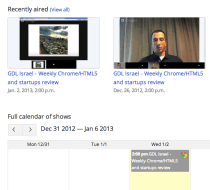
Today, in our weekly Google Developers Live Israel show we spoke about HTML5 and web component. It was a macro level overview on this new edge of front-end development. This new project is composed of a group of technologies that should help us (web developers) create moderan web apps using HTML, CSS and JS. They do this by allowing toolkit makers to encapsulate their widgets and UI elements as easily reusable components.
We covered the main players:
- Templates – We can think on it as a new HTML element. It allow us to inert chunks of clonable DOM that can be activated for later use (e.g MDV). You can think of it as objects you creating out of your class definition. This new ‘object’ can contain markup (=CSS) and script (=JS) so it’s much more powerful from the ‘just’ CSS that we have today. We can use it as a decorator to give new style and functionality to our custom (new) HTML element.
- Custom elements – which can be looked as our toolbelt when we are coming to build a new web app and we wish to reuse ‘wheels’ and not reinvent them. We showed how to create new HTML elements by expanding HTML’s existing vocabulary.
- Shadow DOM – It’s like the regular DOM you know (and love) but it’s down in the ‘shadows’ hidden from our eyes. It’s main goal is to give us encapsulations. It’s the glue that let us insert and work with our components. Think of a ‘tab’ component that you don’t need to ‘know’ about it’s style, functionality etc’. It will work for you and you can’t break it from your JS code because you forgot to use a namespace for your app logic.
- Mutation Observers – and how to watch for changes in the DOM in the most efficient way. Continue reading
How To Prevent Your Chromebook From Going To Sleep
 There are some cases where you wish your chromeOS, Chromebook (or Chromebox) will not to enter into sleep mode. A quick example is when you wish to use it in a conference to present a cool web experiment and you don’t want it to vanish after few minutes. Here are two quick ways to achieve it. Both are a bit of a hack… but it’s not a complicated process.
The hacker way
- Login with the admin user.
- Open a terminal by hiting CTRL+ALT+T
- Type the following
- shell (to drop into a standard bash shell)
- sudo stop powerm – to disable sleep when lid is closed. You could go with the longer version of: sudo initctl stop powerm but there is no reason to type more…
- sudo stop powerd – to disable all other power management features.
- Now logout from the menu – But do not restart! Why? because these settings won’t survive it.
The easy way
Install this Chrome extension – Caffeine after your clone/fork it from Github. It is an experimental extension for Google ChromeBooks that overrides the default power settings.
It is using this API:
chrome.experimental.power.requestKeepAwake()
which is still under experiment so you will need to enable it before the installation.
How to install:
- Go to about:flags on your Chromebook, enable “Experimental Extension APIs” and then restart your Chromebook.
- Go to extensions, toggle on Developer Mode, and click load unpacked extension.
- Choose the folder containing this source.
- Toggle / unToggle the menu icon to keep Chrome awake. Is it easy or what?
Happy new year!
[Update Sep 2014] – You can now have Keep Aware extension from the Chrome Web Store. This is the easiest way and it got two option: full system awake (sun is up) or display will go to sleep but network and the rest will continue to work (moon is up).
GDL-IL On Bootstrap Chrome Extensions
 This week we spoke with Alex Wolkov from extensionizr.com fame on Chrome extensions and how/when/why you should use them. During these 30min we covered these main points:
- What is it an extension? If you wish to add functionality to the web app/sites you like? Well, this is the way to do it while using your front-end knowledge (HTML, JS, CSS) to add features to web app/sites that you are working with.
- What about compatibility with other browsers? Crossrider.com (another startup from Israel) provide you wish this functionalty. We showed them in this GDL-IL Extension show
- What are the best tools? Continue reading

