Chrome, JavaScript, webdev

Building a Real-Time Pull-Up Tracker: How I Taught The Browser to Count Our Pain

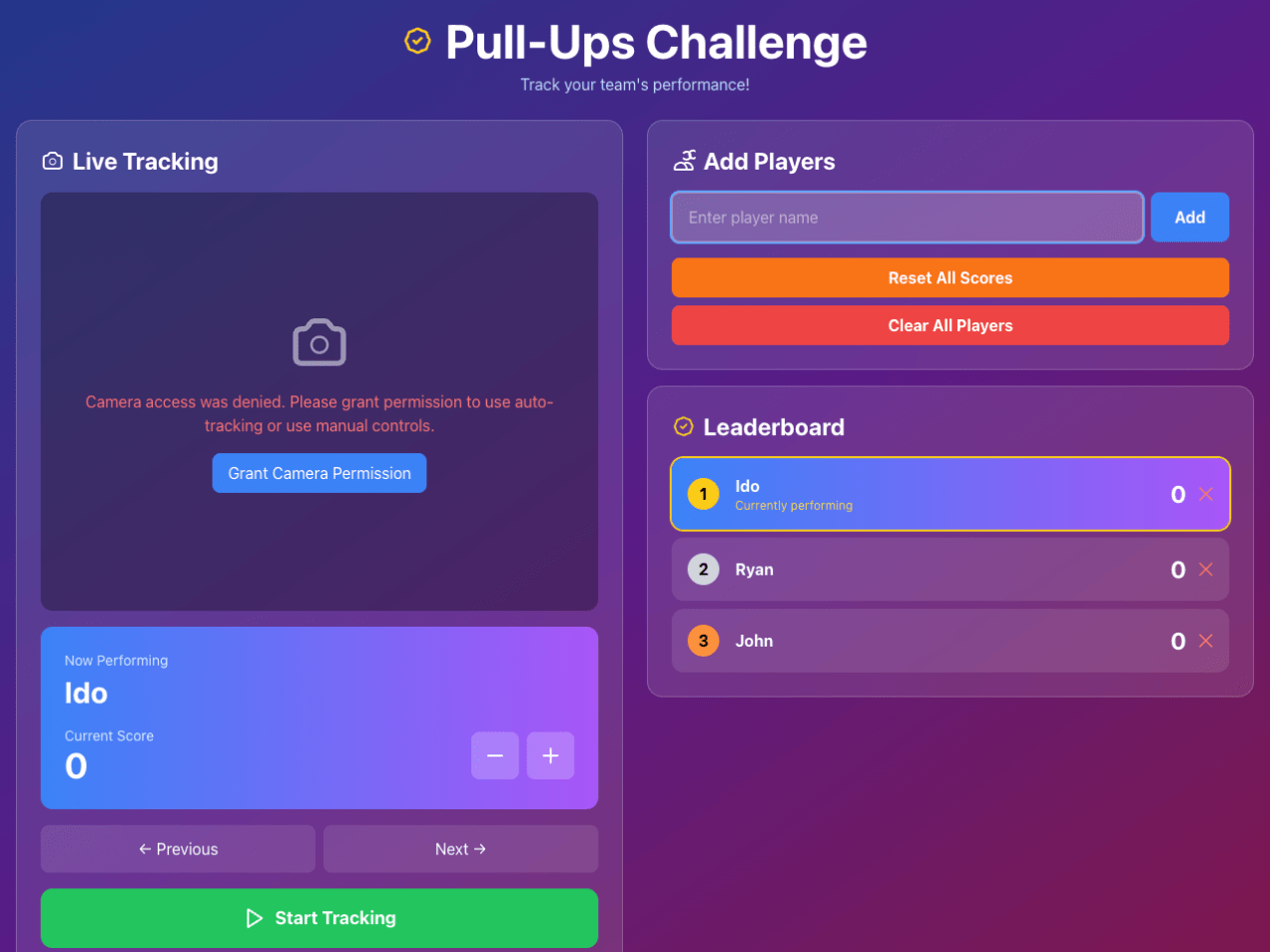
It started as a simple idea my son brought up: Can we make a web app that counts our pull-ups during our pull-up games?

Turns out, teaching a machine to recognize human suffering is both hilarious and complicated.
What began as a “let’s make a quick pull-ups app” spiraled into an intense journey through computer vision, browser quirks, and a few accidental infinite loops that made our laptop sound like a jet engine.

The “Simple” Goal

I wanted to automatically count pull-ups using a web camera.

Easy, right?

Just detect a human, see when they go up and down, and count.

Continue reading →


Standard
JavaScript, webdev

The Future of Coding: LLMs as Collaborators

The rise of large language models (LLMs) has been one of the most transformative developments in software engineering in decades. Tools like GPT4.1, Gemini 2.5 Pro, Claude Opus 4, and various AI-powered code editors such as Cursor (or CoPilot) promise to change the way we build software.

But as these tools evolve and mature, the real question isn’t if we should use LLMs—it’s how.

There’s an emerging split in philosophy between two approaches: full automation through AI agents and IDE integrations, or human-led development using LLMs as intelligent partners.

Based on real-world experiences and a critical review of LLM-based coding tools, the most effective path today is clear:

LLMs are best used as powerful amplifiers of developer productivity—not as autonomous builders.

Let’s break down why.

Continue reading →
Standard
Business

Leveraging AI for Efficient Code Reviews

In today’s fast-paced development environment, leveraging AI tools for code reviews can significantly enhance productivity and code quality. As developers, we often work in isolation or wait hours (sometimes days) for our colleagues to review our pull requests. Large Language Models (LLMs) like GPT-4, Claude, and others can provide immediate feedback, spot potential issues, and suggest improvements within your favorite IDE.

This blog post explores how to craft effective prompts for LLMs when reviewing your code in VSCode, with specific examples for backend Node.js/Express developers and React frontend developers.

Continue reading →
Standard
JavaScript, webdev

The Power of Many: Why You Should Consider Using Multiple Large Language Models

Large Language Models (LLMs) have taken the world by storm. These AI systems can generate text, translate languages, write different kinds of creative content, and answer your questions in an informative way. But with so many LLMs available, each with its own strengths and weaknesses, how do you choose the right one for the task? 

The answer might surprise you: it’s about more than picking just one. Here’s why using multiple LLMs can be a powerful approach.

Continue reading →
Standard