Two week ago, I have the pleasure to take part in HTML5Fest Israel and give the keynote. It was a great event that the Israeli office of the W3C organize. If you wish to read some of the main points check out this blog post. It was a short talk because I thought I had 30min but in the end of the day… It was shorter.
Nevertheless, I had great time having interesting conversations with lead developers in the crowds for the rest of the day. I can’t wait for next year event…
Last night, I gave this talk to Google Developer Group Tallinn about the new APIs that we have today in HTML5 and CSS3. It was (another) great hangout where you can ‘touch’ people that are quite far from your location and speak with them about mutual interest.
Some of the topics that I covered during the talk where: Continue reading →
Today I sat with Nissim Benito (our very own Chrome/Hardware expert) to talk about the new features we have in ChromeOS. We covered the hardware specs that you have on Chromebox and Chromebook. These devices give you a lot of option to connect 6 USBs, 2 DVI etc’. We showed how you can use modern web apps that are out there today to be more productive and safe. In case you want to test ChromeOS before you buy it, you can go to best buy or Install ChromiumOS On Your (Old) Laptop another option is to test ChromeOS In VirtualBox. I’m sorry for the quality of the audio… I hope to solve it until the next episode.
Last week, I’ve went to live person HQ to give a talk in ILTechTalks on HTML5 and how you can use some of its new APIs in order to build you next web app. Today, web apps like: gmail, maps, google docs etc’ are consider to be modern web apps. They are rich, interactive applications that users spend long hours with them. There are few features that distinguish modern (or great) web apps from sites: Continue reading →
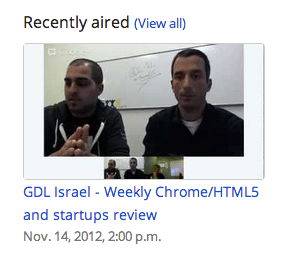
Today I’ve spoke on GDL-IL (=Google Developer Live Israel) with Ron Reiter on his work at Any.Do and how he leverage backbone.js to create this useful chrome extension. The main points we covered during our talk:
Chrome Extensions– How you start developing them and why you will want to do it.
Extensions are small software programs that can modify and enhance Chrome. The best part is that you write them using web technologies such as HTML5, JavaScript, and CSS. Here is the code for the example extension I’ve wrote as ‘short cuts’ to Chrome internal pages.
Ron gave us a short description on backbone.js and what are the main components in this MV* framework. You can learn more at: http://documentcloud.github.com/backbone/
We talked about Any.do extension and Ron gave a nice overview of the code he used for the sync layer.
Few tips for extensions developers:
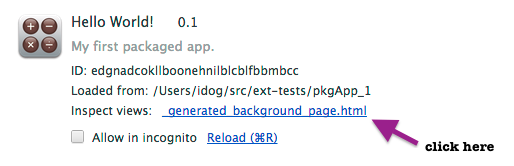
How to inspect an extension: open the popup and right click inside of it. It will give you the option to open chrome devtools (with the ‘inspect element menu item). In cases, where you don’t have a popup – you can always use chrome://extensions and click on ‘inspect background page’.
If you have some logic you wish to test without the extension (or not inside it) you can always run QUnit (or any other unit test framework) on a page that will be a proxy to your popup’s index.html file.
During my work with big organizations I got many questions about deploying Chrome for enterprise. What are the management capabilities? Which policy I can control? Is there an option to use MSI? The good news is that most of the answers are… Yes! Chrome/Chromuim supports few ways to control your browser’s activity. It can be done by using group policy, MCX files and external configuration files. In the end of the day, the administrator of your organization can manage and control all the Chrome installations. One of the main question CIO/CTO has is about the option to control the auto-updates. Well, You can control it. For more details you can read the first bullet in the list below. The other items in that list will help you understand more on the capabilities and see how you can deploy it on any network (windows, linux and mac).
Windows Quick Start – This tutorial will show you how to get Chromium / Google Chrome deployed and configured on a Windows network.
Mac Quick Start – Get started with managing Chromium / Google Chrome on a Mac network.
Linux Quick Start – Managed instance of Google Chrome or Chromium up and running on Linux.
(*) More information on all the benefits of Chrome for enterprise and businesses can be found here. And as we know, in the business world the EULA is important as well.
Chrome Frame
Another great option for enterprises that need to work with IE is to install Chrome-Frame. Chrome Frame is an Internet Explorer plug-in that renders specific web pages in Chrome. That’s right… You will be able to use the latest HTML5 features (e.g. see amazing 3D WebGL charts) inside your IE6-8. It’s very powerful way to empower your people with modern browser today.
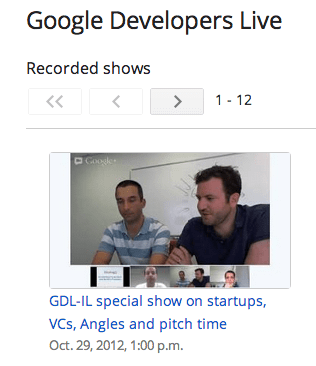
It is a busy week (and we are only on TUE). First, we had the opportunity to host four founders from around the world (Sweden, Moscow and Israel) on GDL-IL. It was in a special episode about: Sartups, VCs, Angles and how to improve your pitch. I had the pleasure to host Eze Vidra, Head of Google Campus London who gave important feedback after each pitch. The structure of the show was like that: each founder got 3 minutes to pitch his startup and then we gave them feedback and asked more questions in order to understand the strengths better. I liked the fact that each founder choose a different way to pass his message. It was very interesting to hear the progress and learn about the key accomplishments that each of them made. I will write a more detailed summary of this conversation but for now you can enjoy it over here:
Second, last night, fresh from the oven a new podcast in hebrew on HTML5 and CSS3 New & Cool Stuff saw life. I had the honor to be a guest (again) on reversim.com and talk about new web technologies that I’m passion about. If you are a developer that wish to hear quality content in hebrew on subjects that relate to your profesional life. Give it a try, today they have more then 150 episodes that cover A LOT of topics. You can download the mp3 file from here.
Let’s start with some cool features you should use in Chrome DevTools:
Device emulation – You can set a new User Agent so your web app will think you are now access it from a mobile phone/tablet etc’. This is a great feature that used to be something you needed to use a Chrome extension in order to have.
Dimension overriding – This is very cool because it let developers debug mobile web apps on different devices and operating systems via the Settings Menu. You can emulate the exact device metrics of many devices (e.g. iPad/iPhone, Galaxy Nexus/Tablets and even BB) so your media queries will run without any bugs.
Touch event emulation to make it easier to debug mobile applications on the desktop. Of course, you can have other simulators (e.g. Android and iOS) but here you have it inside Chrome!
If you wish to play with the latest and greatest features that are under ‘experiments’. You should go to: chrome://flags/and click ‘Enable’ on: ‘Enable Developer Tools experiments’ then in the setting panels of the devtools you will have more granular control on the specific feature you wish to use. For more checkout the official page of chrome developer tools.
You can watch the 10min episode on our GDL-IL page.
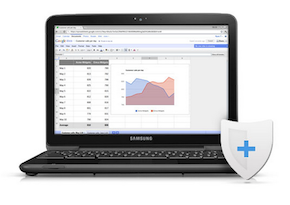
As you all know, last week we had the launch of the new Chromebook for everyone. I’m really existed about this new device because it’s a combination of cheaper (249$ on amazon), better (lots of improvements + important security capabilities), faster (well, lighter). Some of the interesting specs are:
11.6’’ screen
0.7 inches / 2.42 pounds
6.5 hours of battery (I had it running for more then 8h – but maybe, it because I was working mostly with email/docs and cloud 9 and not watching movies).
Boots up in less than 10 seconds
100 GB of Google Drive free for 2 years – Yep, 100G.
You can test the water with it on several locations in the US (e.g Best Buy) and ‘feel’ it. I can say that in the past months I’ve worked with a very close model and it was a great device. If you ‘live’ in the cloud and do not need photoshop (like 99% of the internet users) it might be a device you want to checkout. As web developers, if you are using a cloud IDE (e.g. like one from this list) It might be very good option.
The Chromebook for everyone
Compare the new device to his ‘older’ brother
I had an urge to do the same video but then I’m notice this one… so here you go. It’s cover the major differences in terms of the hardware. As for the OS and the new features in Chrome… It’s the same (of course).
Here is a short webcast that shows how to build “IndexedDB in a jQueryMobile app”. If you thought about building a modern web application with offline capabilities, it will be a good 101 session for you. For the full code you can read “How to use indexedDB” and here is a live demo of this mobile web app. It seems that with the JavaScript shim that I’m using this is a nice solution for developers that wish to target both Android and iOS as it should work in both Chrome for android and mobile safari. Moreover, soon when IE10 will be in the ‘wild’ web, indexedDB API will be available in Chrome, FF and IE, nice ahh?
Btw, one of the reader of the blog point me to another open source IndexedDB API wrapper library – From browsing it, it’s looking good!

 Two week ago, I have the pleasure to take part in HTML5Fest Israel and give the keynote. It was a great event that the Israeli office of the W3C organize. If you wish to read some of the main points check out this blog post. It was a short talk because I thought I had 30min but in the end of the day… It was shorter.
 Nevertheless, I had great time having interesting conversations with lead developers in the crowds for the rest of the day. I can’t wait for next year event…
 Last week, I’ve went to live person HQ to give a talk in

 As you all know, last week we had the launch of the
 Ido Green