
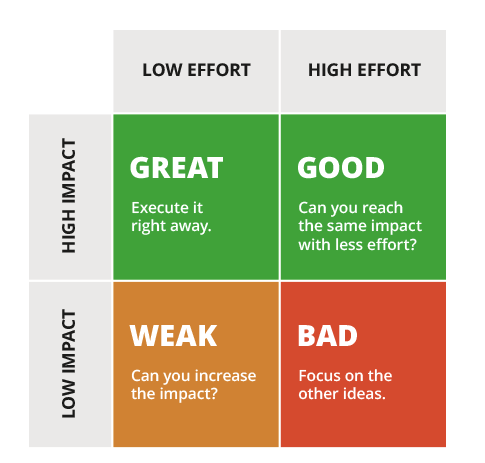
Continue reading“However beautiful the strategy, you should occasionally look at the results.”
Winston Churchill

Continue reading“However beautiful the strategy, you should occasionally look at the results.”
Winston Churchill
After the last few weeks, it clear we are in the biggest financial crisis in our generation. I read “Stress Test” a few months ago and there are several perspectives that are good to be remembered. Especially during these crazy days where the market shows ‘no bottom’.
“The fundamental causes of this crisis were familiar and straightforward,” Geithner writes. “It began with a mania — the widespread belief that devastating financial crises were a thing of the past, that future recessions would be mild, that gravity-defying home prices would never crash to earth.”
The causes of the crisis, in other words, were the same old-fashioned madness of crowds and extraordinary popular delusions responsible for every panic dating back to the Dutch mania for tulip bulbs. The entire society — including all the big banks and some nonbank financial firms, like the insurance company A.I.G. — simply ignored risk.
Continue reading
I find the topic of decisions making to be a fascinating one.
In the past few years, I wrote about it several times and this is the post I keep returning as the ‘checklist’.
However, it’s great to have quick and simple rules that you can use.
Three rules to improve your decisions (that I ‘borrowed’ from @naval):
Also, it’s good to remember that
“It’s extremely hard to make good decisions in a poor environment.”
So do your best to improve the environment (e.g. company, friends) before taking important decisions.
The original tweet:
Have a great weekend.

Psychologist and Nobel laureate Daniel Kahneman reveals the actions we can take to overcome the biases. He talks in this podcast about the things that cripple our decision-making, damper our thinking, and limit our effectiveness.
First one, is thought provoking as you take it to your personal or professional life.
“I think changing behavior is extremely difficult. There are a few guidelines about how to do that, but anybody who’s very optimistic about changing behavior is just deluded.”
The second is about incentives and it’s putting more light to Charlie’s perceptions.
Continue reading
The world has many buzzwords that people like to use. Some are more relevant to the real world and some aren’t. If yesterday was powered by new products and features, today is going to be filled by insights from our communities.
There are around 37 million developers in the world (according to GitHub last report) so it’s a substantial community. Moreover, DevOps is growing at a rapid pace. Btw, according to StackOverflow last survey – DevOps developers and site reliability engineers are among the highest paid, most experienced developers most satisfied with their jobs, and are looking for new jobs at the lowest levels.
I think we can all agree that data is stronger than opinions, rights?
This is what I really like about the special point of view that we have at JFrog. As the “database of DevOps“, we are sitting in a unique place – holding the output of what developers producing.
This is giving us excellent visibility into trends and the real world.
It’s about contrasting perception with reality.
We combined our own data from 5000 customers with internal and external researches in an effort to give you a clear picture of the current state and what are the DevOps trends for the next 12-18 months.


Last week I had the pleasure to participate in a panel that talked about the future of DevOps. It was part of Transform!2019 Event that was in Munich, Germany. Fun fact, from the hotel I could see the Google office, which brought many good memories.
The main goal of the event was to let participants a way to experience what it means to change a company to become more “Intelligent”. The way to share the knowledge was by engaging in an open dialogue between industry leaders, start-ups in the DevOps world, executives and SAP experts. The event had few tracks and many options to network which was a great opportunity to learn from others.
When it comes to creating a business that can thrive in the digital age, the benefits of DevOps are clear. Faster deployment frequency and lower failure rates are proven to be some of the advantages of DevOps adoption. It brings more velocity into your (software) organization and enables you to add more value (faster) to your users.
Continue reading
I read a few years ago the Poor Charlie’s Almanack and found it to be a really great book for many areas in life. It’s also a long and heavy book so you might wish to get it it to your Kindle. Charles Munger is a brilliant thinker and it’s no surprise that the book is full of practical wisdom.
Some of the points I took and used many times:
Incentives – He talks about the incentives and how they are in the root of many systems. One of the more powerful statements is: “If you wish to see what people will do – look at their incentives”. It holds true both to people and to teams & companies.
Bias – How the human mind is closing itself after it ‘knows’ something. That might be really hard when you want to change your thoughts on a topic. You should embrace people who think differently and aren’t agree with you on every topic. It’s not easy but rewarding and will improve your decisions. Continue reading

Thanks to @farnamstreet for these great points that he posted on Twitter. It reminded me of a good conversation with a friend about the ‘right’ and a ‘good’ decision.
A good decision is the best one you can make based on the evidence at hand when you need to decide. Only time can tell if it will be the ‘right’ one. By the way, it is good to remember that many decisions are reversible. With those types of decisions, you can use a lightweight process. You don’t have to live with the consequences for that long if you can change it (which is easy to say and hard to do).
You should improve your skills to recognize quickly that a decision is wrong. When you become good at course correction, you can ‘fail quickly and move forward fast. If you wish to improve and increase the odds of good decisions that turn out on the right side, here is a list of rules to help with the process.

In the past I’ve wrote about status meetings and why you should avoid them. As a basic productivity rule, you should replace meetings when emails or calls will do.
But there are many cases, where you wish to have a meeting in order to: brainstorm, inform, decide etc’.
How can you make it more productive? Continue reading
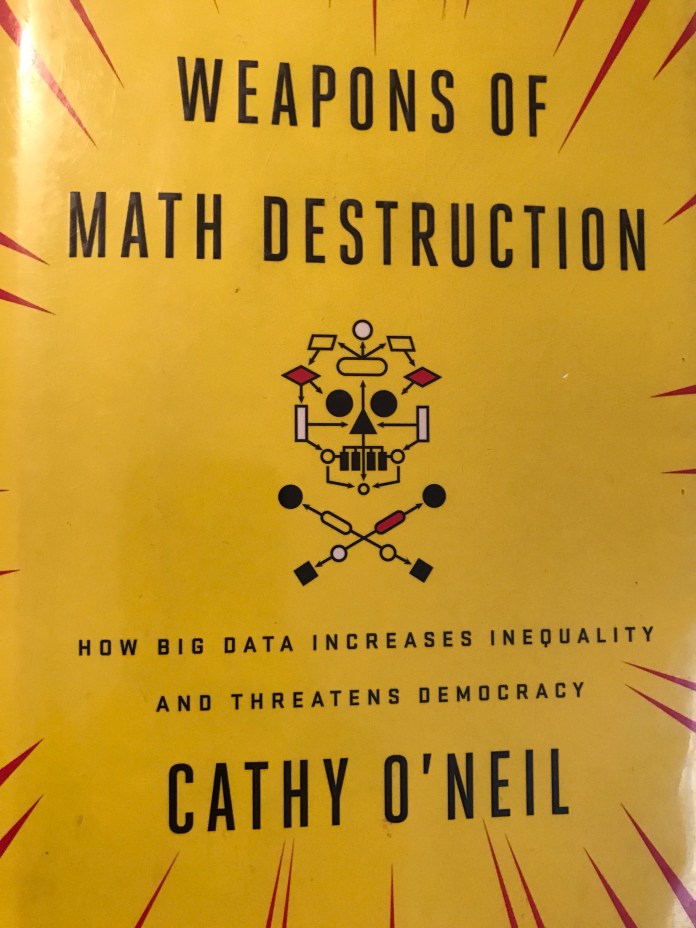
I have just finished this book “Weapons Of Math Destructions” by Cathy O’neil.
It’s an important book that deal with mathematical algorithms and models that control our modern life and where they threat to change many aspects of our social interactions. Think about cases like who is being selected to a certain collage and all the implications. She gives good stories and background to each example in the book.
To me, the bottom line is a call to developers, product managers, scientists (and anyone else who contribute to the creation of these systems) to take more responsibility when they building algorithms. I know it’s a real challenging aspect, as most people are not even aware to the tendencies that they got and influence their decisions. It’s also a call for the regulators to think and ask the hard questions about modern ‘AI‘ systems.
Overall, it’s a good book that is full with good stories and examples that drive her main points about the dark side of big data.
Give it a try.
You might like it as much as I did.
 Ido Green