Business, JavaScript, webdev

Craft Exceptional Web Experiences as a Full-Stack Engineer

At EspressoLabs.com, we’re on a mission to redefine the future of IT/Security management through exceptional user experiences and cutting-edge technology.
We believe that enterprise software should not only be powerful and scalable but also intuitive, elegant, and a joy to use.

We’re building a platform that merges AI-intelligence with seamless design—and we’re looking for a Full-Stack Developer who shares our passion for creating meaningful, impactful technology.


Continue reading
Standard
webdev

Docker 101: From Development to Production – A Quick Guide

Docker has fundamentally transformed the way developers build, test, and deploy applications by introducing a consistent, lightweight, and portable runtime environment. With its ability to package applications and their dependencies into isolated containers, Docker has eliminated the age-old challenge of “it works on my machine” while enabling seamless deployment across various environments. The part of “It’s working for me” used to be funny or sad depends on the day and the hour…

Whether you’re developing locally, testing in a CI/CD pipeline, or deploying to production, Docker provides the flexibility and scalability to streamline these processes. In this guide, we’ll explore the foundational concepts of Docker, dive into its practical uses, and demonstrate how you can harness its power to simplify workflows and achieve greater efficiency in your development and operations pipelines. Whether you’re a beginner or looking to refine your Docker skills, this walkthrough will equip you with the knowledge you need to use Docker effectively.

Continue reading
Standard
Business, webdev

The Power of Agile Methodology: Driving Efficiency and Adaptability

It is not the strongest of the species that survives, not the most intelligent that survives. It is the one that is the most adaptable to change.”
-Darwin

Here are the top 10 companies (from 1980-2005) that were once prominent but are no longer in business:

  1. Blockbuster (Video rental chain, founded in 1985, declared bankruptcy in 2010)
  2. Polaroid (Instant camera company, founded in 1937, filed for bankruptcy in 2001)
  3. Toys “R” Us (Toy retailer, founded in 1957, closed all U.S. stores in 2018)
  4. Borders Group (Book retailer, founded in 1971, liquidated in 2011)
  5. Circuit City (Consumer electronics retailer, founded in 1949, liquidated in 2009)
  6. Compaq (Personal computer company, founded in 1982, acquired by HP in 2002)
  7. Woolworth’s (Retail company, founded in 1879, went out of business in 1997)
  8. Pan Am (Airline company, founded in 1927, ceased operations in 1991)
  9. Enron (Energy company, founded in 1985, filed for bankruptcy in 2001)
  10. WorldCom (Telecommunications company, founded in 1983, filed for bankruptcy in 2002)

Ok, so it’s important to be agile.

Adaptability and rapid response to change are crucial in today’s fast-paced business environment. The pace and speed have increased by 10x (or more) with the new AI wave.

Agile methodology has emerged as a crucial approach for organizations looking to remain competitive and innovative. In this blog post, we will explore the importance of Agile, its main benefits, how to implement it effectively and provide a macro plan for executives. We will also delve into product strategy, goals, Objectives, and Key Results (OKRs) and offer eight practical tips for newcomers to Agile. Additionally, we’ll highlight some tools (that I used and liked) that can facilitate your Agile journey.

Why Agile is Important

Agile is a methodology centered around flexibility, collaboration, and customer-centricity. Unlike traditional project management approaches that rely on rigid, linear processes, Agile allows teams to adapt quickly to changes and deliver value incrementally. Btw, here is a good discussion on Agile Vs Waterfall.

Here are some reasons why Agile is essential:

Continue reading
Standard
life

Are You Doing COVID-19 Research?

“World War II was the defining moment of our parents’ generation. In a similar way, the COVID-19 pandemic—the first modern pandemic—will define this era.” – Bill Gates said it in his last post yesterday.

One of the interesting aspects of his observations is the need to collaborate our efforts on treatments, vaccines, testing and contact tracing.
We all want to help fight Covid-19. At JFrog we are helping developers be more productive with their work by harnessing the power of DevOps best practices (and tools).
Are you working on IoT to medical devices?
Here is one example on how to improve your process to ship better code in a faster way.

There are many more examples like that but bottom line, we want to help any organization that is fighting Covid-19.
You can apply here: https://jfrog.com/covid19/

Continue reading
Standard
cloud

Continuous Software Updates With JFrog Pipelines

“Liquid Software” release practices are rapidly becoming the standard in many companies. However, as software shapes digital transformation, DevOps teams are feeling challenged to manage their growing influence on corporations’ success or failure. In a talk I gave last week, we looked into the growing pains that most enterprises (many of them JFrog customers) face when adopting and consolidating DevOps at scale, and how these challenges are being mitigated with end-to-end platform solutions. We also wrap up with some DevOps best practices that will help you address emerging trends that your bosses’ bosses care about.

The slides

Continue reading
Standard
cloud

JFrog Artifactory REST API in 5min

A good API is like a classic car - You want to use it again and again.
A good API is like a classic car – You want to use it again and again.

Most of the interactions with Artifactory will be from your CI/CD tools. It might be your build engine or from your log aggregator. This powerful API can be invoked in any of the standard ways you like to work with any other RESTful APIs (e.g. curl, CLI, your source code, etc’).
In many cases, it’s the preferred ‘glue’ for developers when it comes to automation. The options are extensive and you can do many useful things with this API. However, in this short post, we will cover the most popular actions you ‘must have’.

Let’s start with the most common action: “upload/download binaries“. This action could run automatically from the build machine to Artifactory using:

Continue reading
Standard
Business, cloud

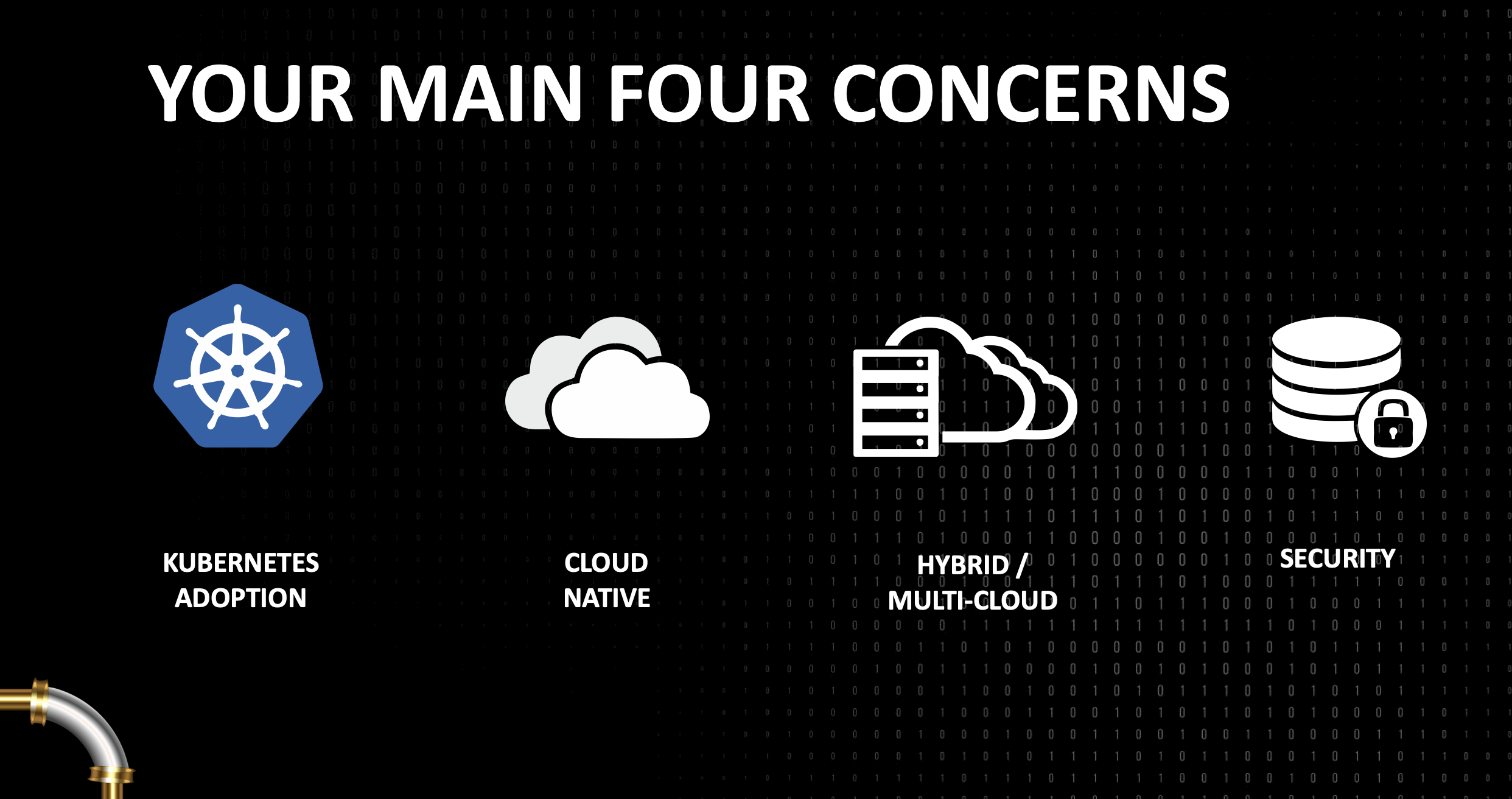
Market Trends Talk – swampUp 2019

The world has many buzzwords that people like to use. Some are more relevant to the real world and some aren’t. If yesterday was powered by new products and features, today is going to be filled by insights from our communities.

There are around 37 million developers in the world (according to GitHub last report) so it’s a substantial community. Moreover, DevOps is growing at a rapid pace. Btw, according to StackOverflow last survey – DevOps developers and site reliability engineers are among the highest paid, most experienced developers most satisfied with their jobs, and are looking for new jobs at the lowest levels.

I think we can all agree that data is stronger than opinions, rights?
This is what I really like about the special point of view that we have at JFrog. As the “database of DevOps“, we are sitting in a unique place – holding the output of what developers producing.
This is giving us excellent visibility into trends and the real world.

What does this mean?

It’s about contrasting perception with reality.
We combined our own data from 5000 customers with internal and external researches in an effort to give you a clear picture of the current state and what are the DevOps trends for the next 12-18 months.

The main challenges

Continue reading
Standard
Business

A Trip To TRANSFORM!2019

Make your software flow

Last week I had the pleasure to participate in a panel that talked about the future of DevOps. It was part of Transform!2019 Event that was in Munich, Germany. Fun fact, from the hotel I could see the Google office, which brought many good memories.

The main goal of the event was to let participants a way to experience what it means to change a company to become more “Intelligent”. The way to share the knowledge was by engaging in an open dialogue between industry leaders, start-ups in the DevOps world, executives and SAP experts. The event had few tracks and many options to network which was a great opportunity to learn from others.

DevOps Panel

When it comes to creating a business that can thrive in the digital age, the benefits of DevOps are clear. Faster deployment frequency and lower failure rates are proven to be some of the advantages of DevOps adoption. It brings more velocity into your (software) organization and enables you to add more value (faster) to your users.

Continue reading
Standard
Chrome

Do You Need A Binary Repository?

Any developer knows that you must have a source code repository (e.g. Git) but from time to time I get the question “why do I need a binary repository”?

Here is the short answer:

Faster and more secure software development – Any company is a software company these days and the best companies release updates on daily/hourly bases. The ability to push updates quickly is a real competitive advantage. The minute you have few engineers on your team you wish to avoid ‘fetching the all internet’ with every ‘npm install’.
A binary repo will give you the option to cache these libraries and make sure you are working with the correct ones (vs a hacked one). From the developer perspective, it is a big boost for their productivity as it saves time during development and on each build. Even better, from the DevOps perspective, the ability to control all the packages/libraries (and scan them for vulnerabilities) is a huge advantage. It enables the internal engineering team to control the releases better as they have full transparency (e.g. quality, performance, security, licenses, etc’) on everything the ‘compose’ the release version. Check the 12-factor app manifesto for more on dependencies (declaration and isolation).

Continue reading
Standard
cloud, testing

Product Excellence Best Practices

What are the components that help teams to build quality into their outcomes?

The main goal is to create a baseline that developers could follow and be in a quality level that is well defined and measurable. The main parts to focus on are:

  1. Testing
  2. Code reviews
  3. Static analysis
  4. Health monitoring: availability, resilience, etc’.

Tests

Continue reading
Standard