Business

The Idea Factory Review

idea-lab

I’ve just finished “The Idea Factory” and although it was long, I really enjoyed it.

It deals with a question that kept me (and many others) busy in the past few years: What causes innovation? and it’s doing it by telling the history of the most productive scientific laboratory on the planet (between 1920 to 1980): Bell Labs.

How did this organization become such a success story?

Bell labs produced seven Nobel Prizes and contributed important innovations: the transistor, transatlantic cable, the laser, UNIX, C++, photovoltaic cells, error-corrected communication, charged-coupled devices, digital communications and the mobile phones. Continue reading →

Standard
Business, Chrome

Go North Innovation Event

The founder of Research In Motion talking about quantum computing research

The founder of Research In Motion talking about quantum computing

I’ve just finish to give me talk at the Go North event. The goal of this talk was to expose young entrepreneurs to the power of the web platform and how they could leverage progressive web apps in order to improve their businesses. It was very cool to meet with a lot of developers and entrepreneurs that are passion about the mobile web. One of the interesting questions I got was around AMP and PWA and how to bridge between them. Here is the detailed answer. The shorter version is that you want to start with AMP as a great first impression that you give your users (it’s all about speed!) and later stay engage/productive with PWA.
The two scenarios below tell this story in a nutshell. Continue reading →

Standard
Business

Progressive Web Apps For Startups

Today I gave a talk at our Startup Space in San Francisco to a group of startups from Mexico.

The goal of this talk was to expose young entrepreneurs to the power of the web platform and how they could leverage progressive web apps in order to improve their businesses. The first section is talking about ‘startups best practices’. Since most of them are in their first steps, I figure it would be valuable to them to hear what they can do better.

The second section is telling the story of progressive web app revolution and how it can help them.
The TL;DR is in the picture below. Continue reading →

Standard
Business

Is Working For This Startup Is The Right Move?

Coming to evaluate if a specific startup is a good option for you?

You should check it from several different angles as the risk/reward is very different from a mature company. The critical aspects that I will look for are:

  • Do you like the people?
    Culture fit is the critical because you need to work with your team mates every day and spend a LOT of time with them, especially if the startup is early stage. If you aren’t having fun with them… will it be worth the time?
    How do you figure this out: Try to go out for a drink or lunch. When you hang out you could learn a lot by talking on life and see how they treat others.

    Screenshot 2015-05-13 18.03.41

Continue reading →

Standard
Android, Business

How To Make Money From Your App?

What are the action items that will increase the odds in that battle to improve your monetization?

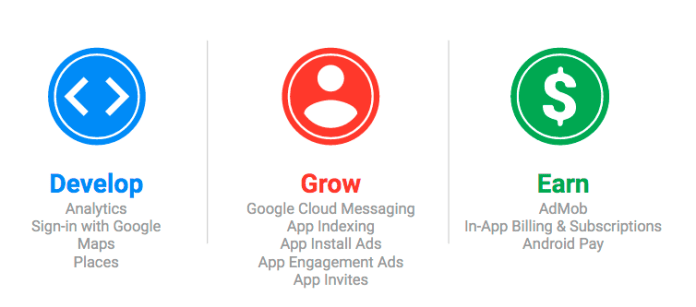
This is one of the most challenging aspect for every startups. After you build your application (or service) you need to measure all the actions that the users take. This is a learning mechanism that will let you iterate (hopefully quickly) and improve your product. Once you feel that you have a good product market fit and you are out of the alpha (or beta) modes it’s time to put efforts in the ‘Grow’ and ‘Earn’ parts.

Let’s see what are some of the tools that we can use.

develop, grow and earn! Continue reading →

Standard
Business

How To Evaluate A Startup?

Why?

It’s mostly depend on the angle you are coming to this good question. If you are the founder, valuation matters because it determines the share of the company you are going to give away (to investors) in exchange for money. If you are the investor, you want to make sure it’s the right deal in terms of risk/reward or give/get.

When you listen to experts in this domain, in most cases, the answer is something like: “It is a form of art rather than science”. But this is not very helpful, is it?

How?

Let’s break the puzzle into few pieces and see how can we think on each one of them. Here are few questions to help us identify what we are doing in each piece. We start with ‘What we  are going to solve’ (=problem) and with ‘How we are going to solve it’ (=solution). Later, we should see what is the potential (=market) and what are the risks (= direct/indirect competitors). We also need to show the team and why it’s capable to deliver. Continue reading →

Standard
Business

Mentoring Entrepreneurs And Developers

Screen Shot 2016-06-16 at 12.51.01 PMIn the past six years I had the pleasure to mentor hundreds of entrepreneurs and developers. For some, as an investor and for others as an external advisor or a domain expert. These days I’m doing it mostly as my day job which is really fun!

Here are some of the lessons learned over time.

If you are an entrepreneur who is asking:
“Why do I need someone to mentor me?”
Well, there are many good reasons, but check the graph below. Continue reading →

Standard
Business

Innovation From One Startup

These are the slides from my talk today at Google IL Office.
It covers:
1. Google’s past, present and a bit of the future.
2. Google’s 5 principles of innovation.

If you are an entrepreneur, there are some good principle to take to your venture (especially from slide 23).

SFO bride to startups

Standard
Business

Failure Is Part Of The Game

blue in the dessertLast night, I read this article. What I like most was the short paragraph that gave few recent examples of ‘big’ failures:

…With original ideas, failure is inevitable, because it’s impossible to predict how technologies will evolve and tastes will change. Mark Cuban passed on Uber. In the early days of Google, Larry Page and Sergey Brin tried to sell their search engine for less then $2 million, but their potential buyer turned them down. Publishers rejected Harry Potter because it was too long for a children’s book. Executives passed on Seinfeld for having incomplete plot lines and unlikeable characters. Pay a visit to Jerry Seinfeld’s bathroom, and you might find a memo hanging on the wall that calls the pilot episode of Seinfeld “weak” and says “No segment of the audience was eager to watch the show again.”

We know that most startups will fail. Moreover, in many cases, they will fail even if they had a good idea and executed well (see: “Why Startups Succeed” for more details).
So be willing to fail and try again.
You are in a good company.

Standard
Business

How To Start? The Execution

Build something people loveThis is the last part from four presentations I did to a course for young entrepreneurs. In the last three lessons: Idea, Product and Team I did my best to focus on the things that will move the needle for you at the early stages. This fourth lesson is all about execution and it might be the most critical part. Continue reading →

Standard