webdev

How to write a useful bug report?

Writing a useful bug report is a critical part of the software development process.
A good bug report can help developers quickly identify and fix the issue, while a poorly written one can cause confusion and delay the process. Here are some tips to help you write a practical bug report:

Make Sure You Have All the Necessary Information

Before you start writing your bug report, make sure you have all the necessary information. This includes:

  • A detailed description of the bug.
  • Steps to reproduce the bug.
  • The expected behavior.
  • The actual behavior.
  • Screenshots or videos of the bug in action.
  • The version of the software you are using.
  • Your operating system and browser.
Continue reading
Standard
JavaScript, webdev

JavaScript Objects 101

The Object type represents one of JavaScript’s data types. It’s important stuff as we will use them—a lot.

It is used to store various keyed collections and more complex entities. Objects can be created using the Object() constructor or the object initializer / literal syntax. Did you know that all modern JavaScript utilities for working with objects are static?

Here is an example of a JavaScript object that contains two names and one key:

let obj = {
  name1: "John",
  name2: "Jane",
  key: "value"
}
Continue reading
Standard
Business

Full-stack Developer – ESGgo

There is an increasing interest in how companies are managing their environmental, social, and governance (ESG). Since it’s a new topic, many companies struggle to cooperate with the changing demand around the ESG arena.

This is why we are building a new platform that will help companies leverage ESG and not struggle with it. Instead of manual data entry into spreadsheets or using emails over long threads, our platform automates data collection and reporting across all the company departments. It will also have the ability to create reports, dashboards, and benchmark information that will help you identify gaps. On top of it, we will have an AI layer that will provide recommendations for setting goals and improving ESG standing against any reporting framework (e.g. GRI).

If you are passionate about zero to one effort and like to work on important and hard challenges – You should join us. We are hiring engineers/hackers/developers who like to build zero to one products. If you know of a friend that you respect and they fit the description below – Please point them in my direction, ok?

Continue reading
Standard
cloud

Continuous Software Updates With JFrog Pipelines

“Liquid Software” release practices are rapidly becoming the standard in many companies. However, as software shapes digital transformation, DevOps teams are feeling challenged to manage their growing influence on corporations’ success or failure. In a talk I gave last week, we looked into the growing pains that most enterprises (many of them JFrog customers) face when adopting and consolidating DevOps at scale, and how these challenges are being mitigated with end-to-end platform solutions. We also wrap up with some DevOps best practices that will help you address emerging trends that your bosses’ bosses care about.

The slides

Continue reading
Standard
cloud

VP Of Technology At JFrog

At last SwampUP, I had the opportunity to talk with Alan Shimel, Founder and Editor at DevOps.com. We covered what I do at JFrog and spoke about the definition of the role “VP of Technology”. We also covered some interesting new products we offering these days to help developers move faster.

I told Alan that I define the role as “finding leverage points in (JFrog) technology to support the business”.

Continue reading
Standard
Chrome

Do You Need A Binary Repository?

Any developer knows that you must have a source code repository (e.g. Git) but from time to time I get the question “why do I need a binary repository”?

Here is the short answer:

Faster and more secure software development – Any company is a software company these days and the best companies release updates on daily/hourly bases. The ability to push updates quickly is a real competitive advantage. The minute you have few engineers on your team you wish to avoid ‘fetching the all internet’ with every ‘npm install’.
A binary repo will give you the option to cache these libraries and make sure you are working with the correct ones (vs a hacked one). From the developer perspective, it is a big boost for their productivity as it saves time during development and on each build. Even better, from the DevOps perspective, the ability to control all the packages/libraries (and scan them for vulnerabilities) is a huge advantage. It enables the internal engineering team to control the releases better as they have full transparency (e.g. quality, performance, security, licenses, etc’) on everything the ‘compose’ the release version. Check the 12-factor app manifesto for more on dependencies (declaration and isolation).

Continue reading
Standard
cloud, testing

Product Excellence Best Practices

What are the components that help teams to build quality into their outcomes?

The main goal is to create a baseline that developers could follow and be in a quality level that is well defined and measurable. The main parts to focus on are:

  1. Testing
  2. Code reviews
  3. Static analysis
  4. Health monitoring: availability, resilience, etc’.

Tests

Continue reading
Standard
Business

Overcoming Limiting Factors: Essential #StartupTips for Success

In reality, we see many examples that too much capital makes your startup unfocused, and it’s a curse, not a blessing. Getting funds at the beginning puts you in the wrong position of ‘spending’ money and not earning it. Minimizing it as much as possible is a smart move that helps build a healthy business. One that is making money and spending only some of it. It sounds too basic, but you will be surprised how many founders forget it after raising the first round. You wish to start lean and mean and keep it as long as possible.

Limited capital makes companies focused.

This is important when you wish to build a business and make it profitable in a limited time.

The main limiting factors for startups:

  1. The management team – Can the founders and other leaders make the right decisions and drive execution that is focused and moving the needle to customers?
  2. Focus – Focusing on what to do and, more importantly, what not to do is critical.
  3. Part of that is keeping to play to your strength, not responding to others in the market, and failing to play their game. You can go deeper on the topic in Malcolm Gladwell’s book: “David and Goliath: Underdogs, Misfits, and the Art of Battling Giants” in a nutshell, you (as David) want to move the battle to your expertise so the odds to win will be in your favor.
  4. Time – You got funding, and it’s buying you time to execute. If you can’t reach the milestone you put to yourself, it might lead to a path you wish to avoid (e.g., more rounds and no profitability).

As Henry Ford said:

“If you think you can do it or think you can’t do it – you are probably right.”

It’s always easy to come up with excuses and ‘reasons’ for why: more of X and more of Y could have been helpful, but if you are resourceful and got grit, you can win.

Knowledge, in this case, is half the solution.

Take ownership, focus like a laser, and good luck!

Standard
Business

Lean Canvas Basics

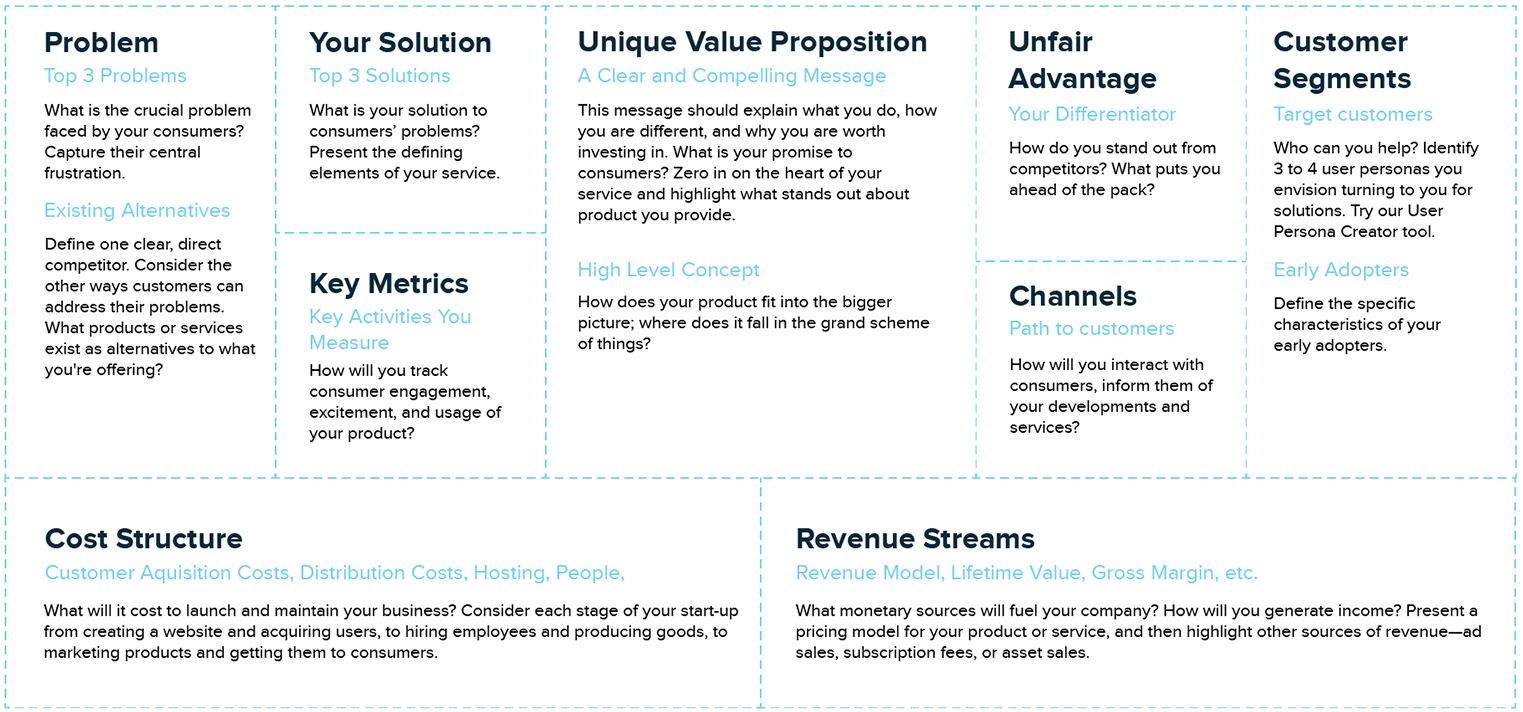
The lean canvas is a tool that helps entrepreneur with forming their idea into a macro plan and later (hopefully) a full function service or product.

You can use something like a good pitch deck to do the same. The core in these tools is to help you articulate what are you going to do and how you are going to win with it.

Let’s have a look at the page below. You can click on it to see it on a full page. If you wish to work with such a template – scroll down and print the clean one that we got in the bottom of this post.

lean canvas

The idea here is to think on our idea and to break it down to the different aspects.

We will fill in short bullet points each section. If you have a co-founder or advisor/mentor to consult with, please do so. It will improve the final result. Also, show the result to many people that you respect. Each might give you a point of view you didn’t think about. Continue reading

Standard
Chrome, webdev

Progressive Web App?!

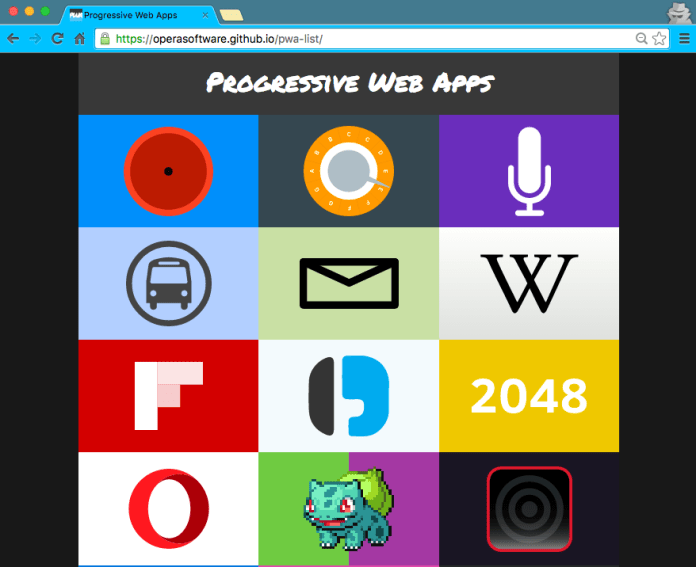
pwa 2016-02-24 at 10.00.27 AM

We have today on the web capabilities to create web apps that feel and act like a native application.
Yes – We do.
We can have offline first, push notification even when the browser is running in the background and add to home screen. These three features bring us to a point where we can give users our content and features with one click and with all the benefits of the web.
What is this new monster you ask?
Well, let’s try to describe it and give few examples. Continue reading

Standard