Business, life

Second order thinking in practice

Some decisions seem like wins at first, but turn out to be losses over time. Second-order thinking is the ability to think about the consequences of one’s actions, and to consider how different courses of action can affect the long-term outcomes. It is a tool that will help you examine the long-term effects of your decisions.
In some cases, try to shift the timelines. Will this decision be impactful in 5 days? 4 weeks? 12 months? 10 years?

By doing this, you are looking at the larger picture and taking a longer-term view.
To do this well, you will need to look at both the direct and indirect consequences of your decisions

Second-order thinking involves taking into account the ripple effect of your decisions and how they can affect the future. It requires you to think beyond the immediate outcomes and consider the future implications of your current choices. This is especially important for business decisions, where a single decision can have lasting implications.

Continue reading →
Standard
life

The 2022 Year Summary – Books And Running

In the past few years (2019, 2018, 2017, 2016, 2015, 2014, 2013) I’ve been summarizing the year on sports events (Ironman, running, biking, snowboarding, etc.) and books.

Here are some of the books I’ve enjoyed most in 2022.

A thousand splendid suns by Khaled Hosseini – I first read it around 2010 or 2011, but early this year, I went back. It is a sad and powerful story of love, friendship, and the enduring human spirit. It is a testament to the resilience and strength of women and a moving depiction of the struggles and triumphs of life in Afghanistan. Yes. You will cry (just like I did).

“Where the Crawdads Sing” by Delia Owens – A beautifully written and moving story about the power of survival, the resilience of the human spirit, and the enduring mystery of human connection. It is a captivating and heartwarming tale that will stay with readers long after they finish the last page. Yep. There is a Netflix movie that you can watch but like the known phrase, “the book is much better!”

Numbers don’t lie by Vaclav Smil is an exploration of the key global trends shaping the world today and how they will impact the future. Smil, a renowned scientist and author (whom I need to thank Mr. Gates for the intro), examines a wide range of issues, including population growth, economic development, energy, resource use, and environmental change. He uses data and statistical analysis to provide a clear and nuanced view of the key trends shaping the world today and the implications of these trends for the future. Throughout the book, Smil discusses the challenges and opportunities presented by these trends and offers insights on navigating them. He also highlights the importance of addressing these trends in a holistic and integrated way and the need to consider their complex interactions and implications. This is a thought-provoking and engaging book that offers a fresh perspective on the key global trends shaping our world. It is a valuable resource for anyone interested in understanding the forces shaping the future and how we can prepare for and address them.

Noise by Daniel Kahneman explores the concept of “noise” in decision-making and how it can lead to flawed judgment and poor outcomes. Kahneman, a Nobel laureate in economics, argues that noise is a pervasive problem in decision-making and can lead to biased and irrational conclusions. He defines noise as random or unpredictable variations in judgment that can distort or obscure the underlying reality. Noise can come from various sources, including individual biases, the influence of emotions, and the complex and uncertain nature of the world. Through examples and case studies, Kahneman demonstrates how noise can lead to flawed judgment and poor outcomes in various contexts, including business, finance, and politics. He also offers practical strategies for reducing noise and improving decision-making, including using statistical analysis and developing more robust decision-making processes. It is a thought-provoking and insightful exploration of the role of noise in decision-making and how it can be addressed to improve judgment and outcomes.

Continue reading →
Standard
JavaScript, webdev

JavaScript Objects 101

The Object type represents one of JavaScript’s data types. It’s important stuff as we will use them—a lot.

It is used to store various keyed collections and more complex entities. Objects can be created using the Object() constructor or the object initializer / literal syntax. Did you know that all modern JavaScript utilities for working with objects are static?

Here is an example of a JavaScript object that contains two names and one key:

let obj = {
  name1: "John",
  name2: "Jane",
  key: "value"
}
Continue reading →
Standard
Business

How To Learn A New Company?

When you are coming to a new company/team, you want to learn about it.
Usually, you wish to do it quickly because there is (always) pressure to start a be ‘productive.’
There are many cases when the opposite is better for the long term.
You want to take your time and learn more about the WHY without giving your biases a place to run. However, reality forces us to push and try to make things faster/better.

Here is a plan that worked for me in the past.

Continue reading →
Standard
Business, Crypto

Crypto 101 and a bit more

What is a blockchain?
Why is cryptocurrency the future of the finance world?
Below you can find a deck I was preparing for a lighting talk at ESGgo.
Since I got some positive feedback on it, I wanted to share it broadly.
Hopefully, you will find it valuable.

Continue reading →
Standard
JavaScript, webdev

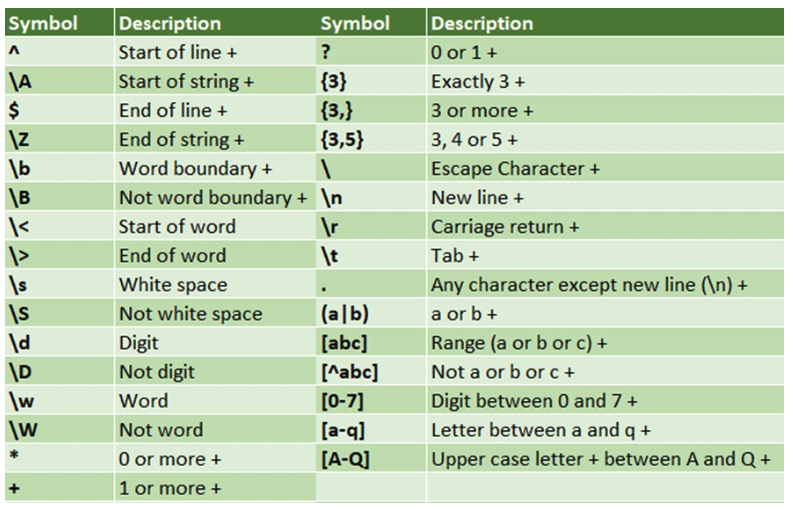
RegEx 101

Regular expression or in short Regex is a string of text that lets you create patterns that help match, locate, and manage text. It’s an important tool in a wide variety of computing applications, from programming languages like JS, Java and Perl, to text processing tools like grep, sed, and vim.

Here are a few helpers to refresh your mind when you need some ‘simple’ regex to do the job.

Continue reading →
Standard
Business, Design

UX/UI Designer Role At ESGgo

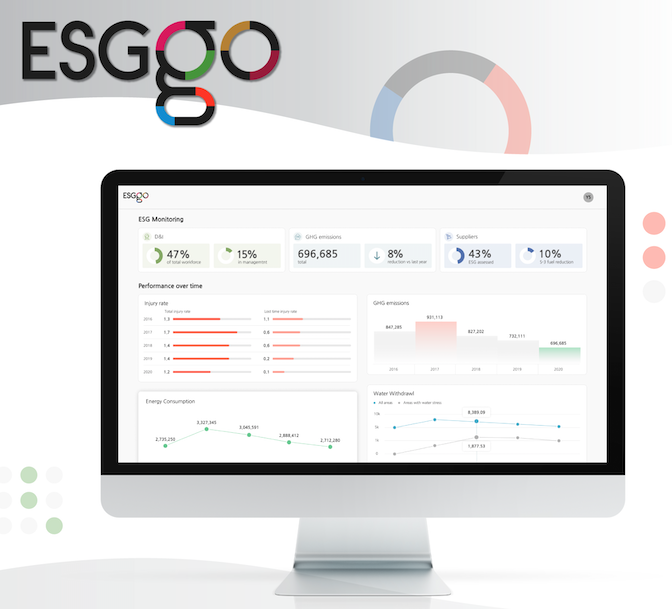
There is an increasing interest in how companies are managing their environmental, social, and governance (ESG). Since it’s a new topic, many companies struggle to cooperate with the changing demand around the ESG arena.

This is why we are building a new platform that will help companies leverage ESG and not struggle with it. Instead of manual data entry into spreadsheets or emails over long threads, our platform automates data collection and reporting across all the company departments. It will also have the ability to create reports, dashboards, and benchmark information that will help you identify gaps. On top of it, we will have an AI layer that will provide recommendations for setting goals and improving ESG standing against any reporting framework.

What is ESGgo?

ESGgo is the ESG-operating-platform for global enterprises.
A group of experienced business professionals and technology experts from Facebook, Google, and McKinsey and teams from the leading Israeli army technology units gathered together to impact the world positively.

We provide best-in-class tools to collect the hundreds of ESG data points across the organization, capture the data and simplify the work-streams.
Moreover, the ESGgo system enables departments to collaborate and analyze the ESG status. Later, the system automatically shares it with the different stakeholders: the management team, board of directors, and even external reports to shareholders.

One of the system’s unique capabilities is that competitive analysis tool: it allows companies to compare external rating agency scores and competitor benchmarks and suggest tactical and strategic actions that could help increase their ESG score.

Continue reading →
Standard
Business

The ESG Data Ambiguity

TL;DR

ESG rating services are essential for investors. However, there is a high variance between them and when I’m saying high variance – it’s more like huge variance.
A good example is America’s most valuable automobile company – Tesla.
MSCI ranks it at the top of the car industry for sustainability, whereas FTSE ranks it as the worst car producer globally. 

Yes! 

You read it right. 

Tesla is both the best and the worst.

One rating agency claims “It’s the best” while another is putting it in last place. The discrepancy reflects the fact that MSCI judges Tesla to be almost perfect on carbon emissions because of its clean technology, while FTSE, which evaluates factory emissions, regards the firm as a serious offender. In this post we will see what are the characteristics of this challenge and how ESGgo platform can help to address them.

Continue reading →
Standard
Business

Full-stack Developer – ESGgo

There is an increasing interest in how companies are managing their environmental, social, and governance (ESG). Since it’s a new topic, many companies struggle to cooperate with the changing demand around the ESG arena.

This is why we are building a new platform that will help companies leverage ESG and not struggle with it. Instead of manual data entry into spreadsheets or using emails over long threads, our platform automates data collection and reporting across all the company departments. It will also have the ability to create reports, dashboards, and benchmark information that will help you identify gaps. On top of it, we will have an AI layer that will provide recommendations for setting goals and improving ESG standing against any reporting framework (e.g. GRI).

If you are passionate about zero to one effort and like to work on important and hard challenges – You should join us. We are hiring engineers/hackers/developers who like to build zero to one products. If you know of a friend that you respect and they fit the description below – Please point them in my direction, ok?

Continue reading →
Standard
Business

Product Management At ESGgo

There is an increasing interest in how companies are managing their environmental, social, and governance (ESG). Since it’s a new topic, many companies struggle to cooperate with the changing demand around the ESG arena.

This is why we are building a new platform that will help companies leverage ESG and not struggle with it. Instead of manual data entry into spreadsheets or using emails over long threads, our platform automates data collection and reporting across all the company departments. It will also have the ability to create reports, dashboards, and benchmark information that will help you identify gaps. On top of it, we will have an AI layer that will provide recommendations for setting goals and improving ESG standing against any reporting framework (e.g. GRI).

If you are passionate about zero to one effort and like to work on important and hard challenges – You should join us. We are hiring engineers and product managers. If you know of a PM that you respect and they fit the description below…

Please point them in my direction, ok?

Continue reading →
Standard