
 In this episode of Google Developer Live Israel I’ve covered in the first 6min how to work with Eclipse and Google plugin. This plugin is a great way to manage your app engine projects and to push your code to google cloud. The main goal of this video is to show developer how they can have a server up and running on Google App engine in few minutes. From 6:47 mark you can hear this explanations in hebrew… This part of the talk is tailored mainly for the developers/gamers that are coming to a hackathon event we have during this weekend around Hangout APIs. I am looking forward to see the cool games that will be built on this API…
Category Archives: HTML5
Google Cloud And Mobile Web

Two talks in one day…
That’s what I did yesterday for Google Developer Group (GDG) Athens, Greece. It was a great opportunity to talk about the new cool aspects of google cloud platform (Yep, checkout things like: NodeJS on Compute Engine, App engine new support for technologies, Monte Carlo Simulations with App Script, Cloud storage, Big Query and many more). We talked for the first 25min on the new aspects of developing mobile web sites (and/or mobile web apps). In one word – go check out yeoman.io. Of course, there are many more aspects that are in the slides, so feel free to browse them and please let me know if I’ve missed something important that you are using in your mobile web project. Continue reading
Raspberry Pi And Google Coder #socool
The Web is awesome and this week I had the pleasure to play with a new ‘face’ of the web platform. It’s built for Raspberry Pi and you can take it as far as your imagination will let you.
Coder
Coder is a very cool project that aim to be a simple way to make web stuff on Raspberry Pi. Short and sweet. It is also an experiment for Raspberry Pi that give you a free piece of software that turns a Raspberry Pi into a simple, personal web server and web-based development environment. Basically, all that you need, for crafting HTML5, CSS, and JavaScript. Plus, it’s an open-source project so you could fork it and learn from the source on http://googlecreativelab.github.io/coder/ Continue reading
Mobile Web App – Real Life Example
 This week in Google Developers Live Israel, we showed a live example of a mobile web app that is built in two ways. One we used jQueryMobile as our UI framework and for cases where we need to support IE we used bootstrap. All the code can be found on github. The nice aspect in this real demo is that we used google sheets are our ‘server side’ and since its got a cool way to publish their content to the web as RSS, ATOM, XML, JSON feeds we could work with them from the web/mobile apps. The three main elements we used are: Continue reading
WebRTC Updates
 In this week show on Google Developers live Israel we hosted Sam Dutton in order to hear what’s new in the land of WebRTC. What? Well, Web Real-Time Communication (WebRTC) is a collection of standards, protocols, and JavaScript APIs that enables peer-to-peer audio, video, and data sharing between browsers. We covered (with demos) the three primary APIs:
MediaStream: acquisition of audio and video streamsRTCPeerConnection: communication of audio and video dataRTCDataChannel: communication of arbitrary application data
It was a fun 20min talk with some very impressive demos. Here are few demos that show the power of getUserMedia API: Continue reading
Install Ubuntu On Your Chromebook
Chromebook For Developers And Hackers
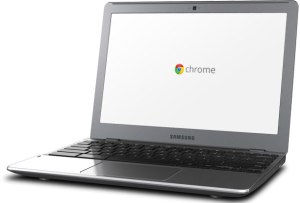
If you are a Linux hacker and/or a developer with a new Chromebook, Chromebox, Pixel or an old laptop with ChromeOS… You might want to have the ability to have a dual-boot option that will let you enjoy the power of your ChromeOS but on the same time be able to boot your laptop with Linux and enjoy C, C++, Java and the fun technologies. It might be hard on other platforms to ‘hack’ them, but since the chromium project is open-source, I guess, they wanted to be hackable by design (e.g. you have a keyboard shortcuts in Pixel that let you enter this mode). Here are the few steps you need to follow in order to enjoy hacking ChromeOS. Continue reading
Chrome & Google Cloud Quick Update (GDL-IL)
 Some of the topic we touch during the show today:
- The list of all the latest Google Developers Live Israel episodes.
- How to work with Big Query with JavaScript and cloud.google.com/products/big-query for more details on the browser tool, clients libraries and API.
- Compute Engine in 5min – It was a fun short show on GDL-IL about starting your own virtual machine inside compute engine.
- Update from the Chrome arena directly from Peter.sh blog
- Chrome releases updates
- If you wish to test your reponsive design here is one online tool that will help you do that: deviceponsive.com
- cloud.google.com as the one source of true for all Google cloud platform products and services.
Google Cloud Platform – App Engine and Beyond
 Few minutes ago we finish a great event in Campus TLV. We had the pleasure to have Dr Peter Magnusson (Director of Engineering for App Engine at Google) and Greg DeMichillie (Director Product Management, Cloud Platform at Google). For the ones, that do not know what is GAE: Google App Engine is a complete development stack that uses familiar technologies to build and host applications on the same infrastructure used at Google. It is used by some of the world most successful and demanding global applications such as SnapChat and Khan Academy. We also cover Google Compute Engine which allows everyone to Run large-scale computing workloads on Linux virtual machines hosted on Google’s infrastructure. I’ve spoke about Google Cloud Endpoint and you can watch the full talk on my project’s site.
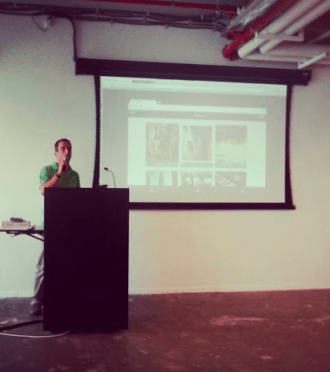
This is the raw recording form the event of all three talks. I hope to have an edited version soon…

Psst… For the next Cloud meetup – Please sign for IGTCloud group.
Big Query Power With JavaScript
 This week on Google developers live Israel we wanted to show the power of Big Query. What is Big Query? Well, in todays world when everyone like to use the term “big data” you need to have the capabilities to querying massive datasets. This can be time consuming and expensive without the right knowledge, hardware and infrastructure. Google BigQuery solves this problem by enabling super-fast, SQL-like queries against append-only tables, using the processing power of Google’s infrastructure. In order to get started quickly and ‘test the water’ there is a powerful online tool that let you query pre-existing datasets like: wikipedia, Github etc’. If you like to type in command line, there is also a command line tool. Before you start your first project you should signup for BigQuery (yes! it’s open now for all). You should log in to the Google APIs Console and make sure you set a new project and allow Big Query API on it. You should also, enable billing if you have not done so in the past. Lastly, head to bigquery.cloud.google.com and click on one of the public datasets that are on the left sidebar. Continue reading
Git 101 – Useful Commands
 A few commands I found myself using daily… Well, it might be a good idea to share it with others and see what can be done better. If you like to get out of the command line, I found Source Tree to be a powerful free application that give you many options to see the code, changes and flow. You might want to check it out. Another good option is the GitHub official client app. Ok, let’s jump into the list of git commands. Continue reading
 Ido Green