“If you seek tranquillity, do less.” – Marcus Aurelius
In a world that constantly demands more from us, Greg McKeown’s book Essentialism: The Disciplined Pursuit of Less offers a refreshing and counterintuitive approach to achieving success and fulfillment. I finished it last weekend and decided to try to create a summary so I could browse it in the future when people are pushing for ‘more.’
This interesting book challenges the notion that we can have it all and advocates for a more focused, deliberate way of living and working.
The Core of Essentialism
At its heart, essentialism is about doing less but better.
Studying is an important and challenging task. In many cases, it won’t be fun. The primary feeling will be of an effort. It’s like this big ‘gym session’ that you hate. You are doing a mental effort equivalent to a physical one (=sweating). What’s even more tricky is to find what works best for you.
Let’s explore practical, real-world strategies to boost your study game. This post is based on Huberman’s outstanding research.
“It is not the strongest of the species that survives,not the most intelligent that survives.It is the one that is the most adaptable to change.” -Darwin
Here are the top 10 companies (from 1980-2005) that were once prominent but are no longer in business:
Blockbuster (Video rental chain, founded in 1985, declared bankruptcy in 2010)
Polaroid (Instant camera company, founded in 1937, filed for bankruptcy in 2001)
Toys “R” Us (Toy retailer, founded in 1957, closed all U.S. stores in 2018)
Borders Group (Book retailer, founded in 1971, liquidated in 2011)
Circuit City (Consumer electronics retailer, founded in 1949, liquidated in 2009)
Compaq (Personal computer company, founded in 1982, acquired by HP in 2002)
Woolworth’s (Retail company, founded in 1879, went out of business in 1997)
Pan Am (Airline company, founded in 1927, ceased operations in 1991)
Enron (Energy company, founded in 1985, filed for bankruptcy in 2001)
WorldCom (Telecommunications company, founded in 1983, filed for bankruptcy in 2002)
Ok, so it’s important to be agile.
Adaptability and rapid response to change are crucial in today’s fast-paced business environment. The pace and speed have increased by 10x (or more) with the new AI wave.
Agile methodology has emerged as a crucial approach for organizations looking to remain competitive and innovative. In this blog post, we will explore the importance of Agile, its main benefits, how to implement it effectively and provide a macro plan for executives. We will also delve into product strategy, goals, Objectives, and Key Results (OKRs) and offer eight practical tips for newcomers to Agile. Additionally, we’ll highlight some tools (that I used and liked) that can facilitate your Agile journey.
Why Agile is Important
Agile is a methodology centered around flexibility, collaboration, and customer-centricity. Unlike traditional project management approaches that rely on rigid, linear processes, Agile allows teams to adapt quickly to changes and deliver value incrementally. Btw, here is a good discussion on Agile Vs Waterfall.
In the fascinating realm of cryptocurrency, few names carry as much weight as Satoshi Nakamoto, the mysterious figure behind the creation of Bitcoin.
I did a short video about it a few years ago:
Satoshi’s contributions revolutionized how we perceive and engage with (digital) currency, yet much about this enigmatic persona remains mysterious. Among the many enigmas surrounding Satoshi, the allure of his lost emails captivates the imagination of crypto enthusiasts and historians alike.
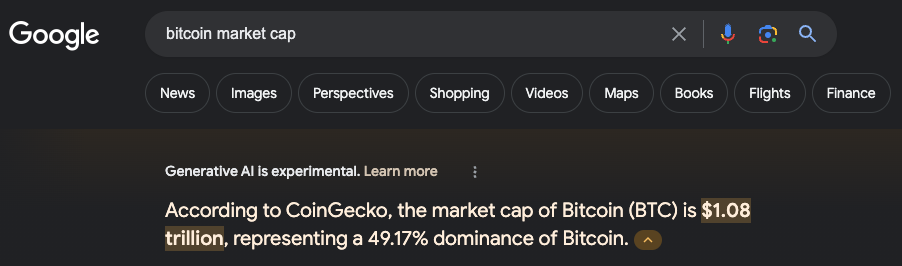
The story begins with Satoshi Nakamoto’s groundbreaking whitepaper, published in 2008, which laid the foundation for Bitcoin. By the way, it’s the best paper I read. In 9 pages, you can gain much wisdom and even understand this complex technical, game theory, and economic brilliance. These nine pages created around 1 trillion dollars of value as of today.
Following this seminal document, Satoshi engaged in correspondence with a select group of individuals, sharing insights, exchanging ideas, and offering guidance on this cryptocurrency project.
However, the intrigue deepened as Satoshi’s correspondence abruptly ceased in 2011, leaving a void of silence that has puzzled researchers and historians ever since. The reasons behind this cessation remain a subject of speculation, ranging from personal reasons to concerns about legal implications and privacy.
Despite the veil of mystery surrounding Satoshi’s disappearance from the digital realm, the significance of his lost emails cannot be overstated. These messages provide a rare glimpse into the mind of the visionary creator who sparked a global financial revolution. Within the digital archives lie clues to Satoshi’s thought processes, motivations, and challenges in birthing Bitcoin into existence.
Understanding the context of Satoshi’s emails is essential for several reasons. First and foremost, they offer a unique perspective on the early days of Bitcoin’s development, shedding light on the technical intricacies, philosophical underpinnings, and ideological debates that shaped its evolution. I was smiling when they mentioned ‘sourceforge’ as GitHub started to go public around 2008, and we are talking about 2009 here.
Satoshi’s lost emails are a cautionary tale about the ephemeral nature of digital communication. In an era where digital footprints are meticulously tracked and archived, the disappearance of Satoshi’s correspondence underscores the impermanence of online interactions. It reminds us of the importance of preserving digital artifacts for posterity, ensuring that future generations can study and learn from the pioneers who paved the way for technological innovation.
Luckly, we just got 120 pages of emails that were just released from the early Bitcoin days.
The emails are 14+ years old and were sent between:
Martti Malmi who was an OG Bitcoin developer.
Satoshi Nakomoto the creator of Bitcoin.
Here are some of the interesting questions that these emails are answering:
While software development practices constantly change, there will always be a tier of truly top engineering teams who stand above their peers by combining unparalleled efficiency with top-tier code quality. What are the metrics that will help you evaluate your development team? That question arises in many startups once you have a team of developers and need to run as fast as possible.
Engineering teams are the backbone of any tech-driven organization, and effective leadership is crucial to maximizing their productivity. As an engineering leader, you have the power to shape the direction of your team and drive their efficiency. In this blog post, we’ll delve into 15 essential strategies that can empower you to lead your engineering team to success.
You are probably thinking: “Why 15?”
So the easy answer is: “Why not?” but a longer one is that after the time with Google, Netflix, and Meta – These are a collection of ideas I’ve collected.
A VC memo is a crucial tool for venture capitalists to evaluate startups. It allows to:
Document the thinking: The memo forces the VC to think critically about the startup and its potential. This can help them identify potential risks or challenges and make a more informed decision about whether or not to invest.
Communicate with their partners: The memo can communicate the VC’s thoughts on the startup to their partners. This helps build consensus within the VC firm and ensures everyone is on the same page about the investment.
Track their investments: The memo can track the VC’s investments over time. This can help them assess their portfolio companies’ performance and make adjustments to their investment strategy as needed. It also helps to debrief the decisions in retrospect.
In his address to the graduating class of Northern Arizona University, Bill Gates expressed admiration for their hard work and dedication. He urged them to channel their education toward positively impacting the world’s most pressing issues. Gates inspired the graduates to use their knowledge and skills to create meaningful change and contribute to the betterment of society.
The framing effect is a cognitive bias where people react differently to the same information depending on how it is presented. This effect can be used in business and personal life to influence people’s decisions and behaviors.
At Meta, it is one of the critical ways of thinking for managers. You wish to lead by doubling down on people’s strengths, which is a superpower that brings results and happiness.
Annual letters give us a glimpse into the minds of the founders. It’s an excellent way to understand what drives them and their companies.
Stripe is a financial services company that provides payment processing, software development, and risk management tools for businesses of all sizes. In February 2023, Stripe released its annual letter, which provides an overview of the company’s performance in 2022 and outlines its plans for the future.
The letter, written by Stripe’s co-founders, John and Patrick Collison, contains valuable insights for founders.