I’ve just finish to give me talk at the Go North event. The goal of this talk was to expose young entrepreneurs to the power of the web platform and how they could leverage progressive web apps in order to improve their businesses. It was very cool to meet with a lot of developers and entrepreneurs that are passion about the mobile web. One of the interesting questions I got was around AMP and PWA and how to bridge between them. Here is the detailed answer. The shorter version is that you want to start with AMP as a great first impression that you give your users (it’s all about speed!) and later stay engage/productive with PWA.
The two scenarios below tell this story in a nutshell. Continue reading
Category Archives: Business
Progressive Web Apps For Startups
Today I gave a talk at our Startup Space in San Francisco to a group of startups from Mexico.
The goal of this talk was to expose young entrepreneurs to the power of the web platform and how they could leverage progressive web apps in order to improve their businesses. The first section is talking about ‘startups best practices’. Since most of them are in their first steps, I figure it would be valuable to them to hear what they can do better.
The second section is telling the story of progressive web app revolution and how it can help them.
The TL;DR is in the picture below. Continue reading
Startup Pitch Deck
In the past 5 years, I meet with hundreds of entrepreneurs and developers that were starting a new company.
In many cases, it was during a pitch or mentoring session.
I learn a lot from these meetings.
One surprising learning was a common intimidation from pitching your startup. If there is one thing that entrepreneurs are really afraid from is this moment of true, when they need to sell.
Let’s not get into the why here but focus on what can reduce this stress.
If you think about it, it’s a way for you to gain trust and show that you can deliver.
No one (with experience) want to see that you got all the answers but investors do want to see that you are thinking on the right issues and you have a plan. It’s true, that “everyone has a plan until they get punched in the face” but it’s still valuable to see such a plan.
Here is the template for a good pitch deck.
The one I will use myself and tell my kid to use.
You can feel free to add slides but please keep in mind that your presentation should not be longer than 15 slides as you want to finish it under 20min and leave room for open conversation. Continue reading
A New Space For Startups In San Francisco
Today we are opening our new Space for startups in San Francisco.
I can see that you are asking, what?
Well, it is a place to explore the latest technologies and learn how to build successful startups. It a great feeling to build new things and especially when you have the chance to dream about something and than move it forward so it become a reality. I am excited about this place, as it will give us a good option to help more and learn more.
Look below who open it 😉 Continue reading
How To Kanban?
Kan-what?
That is the first thing you hear when someone is hearing about this for the first time. In my last two startups, I used it and it works quite good for us. Like in Agile / Scrum and all the other methodologies, you need to try and take what works for you. The magic in Kanban is the ability to keep most of the ‘things that works’ and gain productivity. If you like to do daily stand-ups meeting – keep them. If you push new version to production every week – keep it and the list goes on. The power of Kanban is in the ability to improve the communication and to put everyone on the same page, or a board in this case.
The Kanban technique emerged in the late 1940s in Toyota. It was their effort to invent a new approach to manufacturing and engineering. Line-workers displayed colored kanbans (=cards) to notify their downstream co-workers that demand existed for parts and assembly work. The system’s highly visual nature allowed teams to communicate more easily on what work needed to be done and when. It also standardized cues and refined processes, which helped to reduce waste and maximize value.
How to use it in your startup?
Super Bosses Playbook
Very few companies got super bosses, but do we know who they are?
How can we find them?
Think on SNL and their amazing process to share talent and collaborate while each team member needs to push her parts so they will be aired.
I enjoyed this book by Sydney Finkelstein (Professor of Management at the Tuck School of Business at Dartmouth College).
In this book, he analyzes the qualities that are shared by rockstar leaders who’ve transformed entire industries. They share a common approach to finding, nurturing, leading, and even letting go of great people. He used few interesting examples from different fields like football coach Bill Walsh, restaurateur Alice Waters, technology CEO Larry Ellison and fashion guru Ralph Lauren.
What super bosses are doing?
Continue reading
How To Rapid Prototyping?
One of the strength points that startups got over big companies is the ability to run fast and try new things. That’s why it’s important to improve your prototyping abilities.
Rapid prototyping composed from quick iterations of these three steps:
- Prototype – Draw, sketch or code something that can be reviewed.
Convert the description of the solution into mock ups that everyone can see and review. You should take into considerations what is the story that will drive the user interaction. What will be the best experience? - Review – Share the prototype with stakeholders (=users, developers and designers) and evaluate whether it meets their needs and expectations. If you can, let them try it and watch what they are doing. Try to mimic the real world as much as you can. For example, if it’s a mobile web app, let users try it with 3G networks (or even 2G) and see what is working and what is not.
- Refine – Based on feedback and data that you collected, identify areas that need to be refined or further defined it in the prototype. Now jump to step #2 and see if the result improved or, like in some cases, they did not.
The key to a successful rapid prototyping is revising quickly based on feedback. You should say ‘no’ to a lot of suggestions and let the data leads you. This approach helps teams experiment with multiple approaches and ideas on their way to a new product. It also reduces the risk by putting everyone on the same page (or in this case, the same image).
What to Prototype?
Use the 20/80 rule.
As a starting point, you can impress your colleagues when you suggesting it… You can start by saying something like: “Let’s work with Pareto distribution“. At this point of the meeting, everyone will look at you with admiration.
But more importantly, it’s helpful – For real.
Focus on the 20% of the key functionality that will be used 80% of the time. You wish to showcase how your product will work and later how it will look like. So ignore all the ‘little’ features that are not part of these core functions.
Is Working For This Startup Is The Right Move?
Coming to evaluate if a specific startup is a good option for you?
You should check it from several different angles as the risk/reward is very different from a mature company. The critical aspects that I will look for are:
- Do you like the people?
Culture fit is the critical because you need to work with your team mates every day and spend a LOT of time with them, especially if the startup is early stage. If you aren’t having fun with them… will it be worth the time?
How do you figure this out: Try to go out for a drink or lunch. When you hang out you could learn a lot by talking on life and see how they treat others.
How To Make Money From Your App?
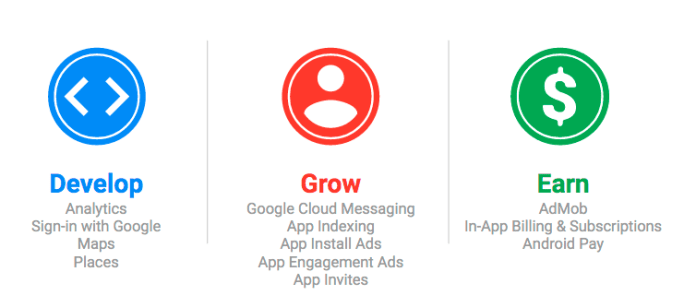
What are the action items that will increase the odds in that battle to improve your monetization?
This is one of the most challenging aspect for every startups. After you build your application (or service) you need to measure all the actions that the users take. This is a learning mechanism that will let you iterate (hopefully quickly) and improve your product. Once you feel that you have a good product market fit and you are out of the alpha (or beta) modes it’s time to put efforts in the ‘Grow’ and ‘Earn’ parts.
Let’s see what are some of the tools that we can use.
How To Evaluate A Startup?
Why?
It’s mostly depend on the angle you are coming to this good question. If you are the founder, valuation matters because it determines the share of the company you are going to give away (to investors) in exchange for money. If you are the investor, you want to make sure it’s the right deal in terms of risk/reward or give/get.
When you listen to experts in this domain, in most cases, the answer is something like: “It is a form of art rather than science”. But this is not very helpful, is it?
How?
Let’s break the puzzle into few pieces and see how can we think on each one of them. Here are few questions to help us identify what we are doing in each piece. We start with ‘What we are going to solve’ (=problem) and with ‘How we are going to solve it’ (=solution). Later, we should see what is the potential (=market) and what are the risks (= direct/indirect competitors). We also need to show the team and why it’s capable to deliver. Continue reading