Business, Crypto

The Significance of Satoshi’s Lost Emails

In the fascinating realm of cryptocurrency, few names carry as much weight as Satoshi Nakamoto, the mysterious figure behind the creation of Bitcoin.

I did a short video about it a few years ago:

Satoshi’s contributions revolutionized how we perceive and engage with (digital) currency, yet much about this enigmatic persona remains mysterious.
Among the many enigmas surrounding Satoshi, the allure of his lost emails captivates the imagination of crypto enthusiasts and historians alike.

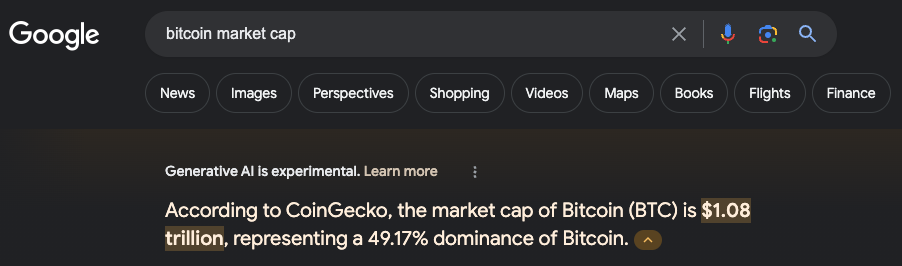
The story begins with Satoshi Nakamoto’s groundbreaking whitepaper, published in 2008, which laid the foundation for Bitcoin. By the way, it’s the best paper I read. In 9 pages, you can gain much wisdom and even understand this complex technical, game theory, and economic brilliance. These nine pages created around 1 trillion dollars of value as of today.
Following this seminal document, Satoshi engaged in correspondence with a select group of individuals, sharing insights, exchanging ideas, and offering guidance on this cryptocurrency project.

However, the intrigue deepened as Satoshi’s correspondence abruptly ceased in 2011, leaving a void of silence that has puzzled researchers and historians ever since. The reasons behind this cessation remain a subject of speculation, ranging from personal reasons to concerns about legal implications and privacy.

Despite the veil of mystery surrounding Satoshi’s disappearance from the digital realm, the significance of his lost emails cannot be overstated. These messages provide a rare glimpse into the mind of the visionary creator who sparked a global financial revolution. Within the digital archives lie clues to Satoshi’s thought processes, motivations, and challenges in birthing Bitcoin into existence.

Understanding the context of Satoshi’s emails is essential for several reasons. First and foremost, they offer a unique perspective on the early days of Bitcoin’s development, shedding light on the technical intricacies, philosophical underpinnings, and ideological debates that shaped its evolution. I was smiling when they mentioned ‘sourceforge’ as GitHub started to go public around 2008, and we are talking about 2009 here.

Satoshi’s lost emails are a cautionary tale about the ephemeral nature of digital communication. In an era where digital footprints are meticulously tracked and archived, the disappearance of Satoshi’s correspondence underscores the impermanence of online interactions. It reminds us of the importance of preserving digital artifacts for posterity, ensuring that future generations can study and learn from the pioneers who paved the way for technological innovation.

Luckly, we just got 120 pages of emails that were just released from the early Bitcoin days.

The emails are 14+ years old and were sent between:

  1. Martti Malmi who was an OG Bitcoin developer.
  2. Satoshi Nakomoto the creator of Bitcoin.

Here are some of the interesting questions that these emails are answering:

Continue reading

Standard
Business, Crypto

Crypto 101 and a bit more

What is a blockchain?
Why is cryptocurrency the future of the finance world?
Below you can find a deck I was preparing for a lighting talk at ESGgo.
Since I got some positive feedback on it, I wanted to share it broadly.
Hopefully, you will find it valuable.

Continue reading
Standard
Crypto

Start with #web3

In the past two years, I’ve been fascinated by the rise of web3. 

As Albert (from union square venture) wrote:

It is difficult to overstate how big an innovation this is. We went from not being able to do something at all to having a first working version. Again to be clear, I am not saying this will solve all problems. Of course it won’t. And it will even create new problems of its own. Still, permissionless data was a crucial missing piece – its absence resulted in a vast power concentration. As such Web3 can, if properly developed and with the right kind of regulation, provide a meaningful shift in power back to individuals and communities.

Albert WengeR – USV

So let’s start with the first step. Get your wallet. You can think on the crypto wallet as a ‘browser’ to the world of distributed applications that lives in the #web3 world. I would suggest you to try a few wallets as we are still very early in this new frontier.

🎁 WALLETS
  • Hardware: I got the Ledger Nano X but another good option is Trezor.
  • Desktop: I like Exodus  and (of course) you need Metamask in your browser. Btw, Brave got a wallet as well but with Metamask it will be ‘easier’ to start ‘trying’ the NFT world as well.
  • Mobile: Exodus , Jaxx and/or Trust Wallet

🚨 Do NOT buy any hardware wallet from third-party resellers such as Amazon or eBay.
Only buy units from the OEM to ensure that you are getting a clean device.

Next, you wish to buy some tokens (e.g. BTC, ETH, SOL etc’) – You can do it in one of the exchanges below.

EXCHANGES
  • Coinbase – The easy way to get into the crypto world.
  • Gemini 
  • Binance.US – large number of supported coins. But sort of centralized solution.
  • Kraken – Decent staking options

Now, let’s create ourselves a ‘portfolio’ and watch the market:

💽  MARKET DATA, PRICE INFO, NEWS AGGREGATORS, MARKET ANALYSIS, ONCHAIN METRICS
  • Messari.io – onchain metrics and market data. They got one of the best UX/UI.
  • CoinMarketCap  – a market data and news aggregator.
  • CoinGecko  – market data and news aggregator.
🎤 CRYPTO PODCASTS
  • proof.xyz – All about NFTs: Artists, Developers and everything else.
  • modern.finance – New crypto projects and some interesting conversations.
  • Bankless – A great analysis and discussions of ETH markets
🎨 NFTs marketplaces
🥅 DEFI RESOURCES
Standard
bots

Ether Info – A New Google Assistant App

Maui beach at sunsetWhat is an Assistant App?

In case you aren’t familiar with assistant apps, it is Google’s conversational software for helping you get things done in your world.

It is the culmination of all of Google’s research in AI, ML and NLP. It runs on various devices, including the Google Home, as well as many Android and iOS devices.

What is Ethereum?

Ethereum is a digital currency invented in 2013 — a full 4 years after the release of Bitcoin. It has since grown to be the second largest digital currency in the world by market cap — around $20 billion, compared to Bitcoin’s $40 billion. Btw, here is a short intro video I made on Bitcoin.

Ethereum uses its blockchain to record state transitions in a gigantic distributed computer. Ethereum’s corresponding digital currency, ether, is essentially a side effect of powering this massive computer. To put it another way, Ethereum is literally a computer that spans the entire world. Anyone who runs the Ethereum software on their computer is participating in the operations of this world-computer, the Ethereum Virtual Machine (EVM). Because the EVM was designed to be Turing-complete, it can do almost anything that can be expressed in a computer program. Continue reading

Standard
Business

Bitcoin And Crypto Currency

Bitcoin is a decentralized, anonymous, digital-only currency that’s lately gotten a lot of public attention. Like any new technology, there are many different aspects and a lot of ‘noise’.
In this 4min video, I tried to focus on the important stuff.

Read more: Crypto-currency 101 and the bitcoin revolution


Standard
Business

Crypto Currency 101 – #bitcoin

bitcoin

Is it important?

Bitcoin leverage a powerful and new technology. It is not controlled or issued by any one organization (e.g. bank or government). Instead, it is an open network which is managed by its users. In a similar way that email and WhatsApp improved communication by making it fast and cheap, bitcoin is an improvement on existing payment methods which were not designed for the internet era.

What is bitcoin?

Bitcoin is a decentralized, anonymous, digital-only currency that’s lately gotten a lot of public attention. It was originally developed in 2008 and like in any good mystery, someone using the alias “Satoshi Nakamoto” published a paper describing how Bitcoins could work. (There is a very interesting story about this guy too. He must be very smart but, has never come forward to claim ownership, or any part in revenue.) Just one year later, at 2009, they started being traded and mined. In short, bitcoin represents a way to transfer money anonymously and at almost no cost. And since it’s an arbitrary currency with no nationality attached to it, you’re free to exchange it with anyone in the world. Since Bitcoin’s core protocol is viewable by anyone, it has been vetted by thousands of security researchers around the world and has proven to be robust and reliable. Continue reading

Standard