
I’ve just finished this interesting book on the biography of cancer. On one hand, it’s a depressing story, as we are still losing many battles.
On the other hand, there are many ways that progress have been made and hopefully, we are in a phase (e.g. genomics research and the cost reduction in analyzing DNA) that will bring us more victories. It is a story about the history of research with eureka moments and decades of despair.
The author, Dr Mukherjee does a great job in describing the history from its first documented appearances thousands of years ago (when the Greek historian Herodotus records the story of Atossa the queen of Persia and the daughter of Cyrus, who noticed a lump in her breast.) through the progress in the twentieth century to cure, control, and conquer it to a radical new understanding of its essence.
I found somewhere this encouraging answer he gave to the question “With all that you have learned up to this point, are you hopeful in terms of cancer research and possible cures?”
Mukherjee: “I feel pathologically hopeful!
The opposite of hopeful is hopeless.
How can you be hopeless?
Discoveries have occurred, and discoveries are occurring.
Look at history, does that mean that every move becomes the most brilliant discovery or the universal cure for cancer? No.
But history clearly shows a track record of progress. Medicine is caught in this moment of pulling out from a sea of uncertainty these little pieces that are more certain than others. I often tell fellows and residents, to me there is no discipline we practice as human beings that manage this level of complexity. Not just statistical or scientific complexity, but emotional complexity. That’s what makes it one of the most unbelievably moving professions that exist.”

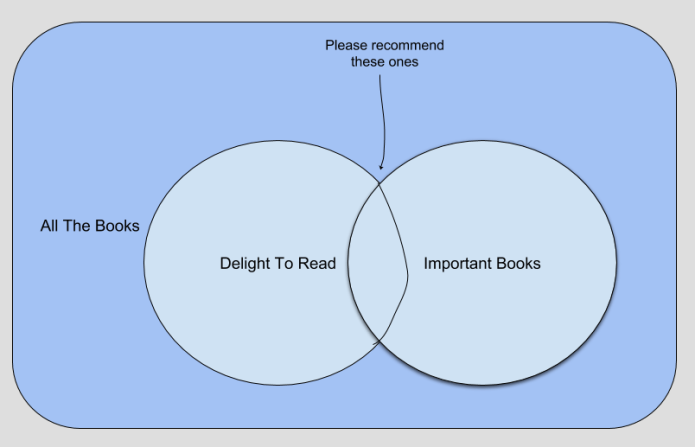
 Yesterday I had an interesting conversation with a friend about ways to improve your knowledge in different topics.





 One of the best books I read in a long time. It’s an interesting story about the humankind in the last ~70,000 years and Harari does it so well, you won’t feel it’s a history book.
 This year was full with good books.
 Here are some of the books I’ve enjoyed in the past 6 months. I am trying to alternate between fiction and non-fiction on a weekly bases. I did two official marathons (Teveria and California international marathon) and another 2 that weren’t part of an organized race, so in the training for these events, I had a lot of time to listen to audio books.
 Ido Green