
Here is a lighting talk (5 min) that I gave more then a year ago in the java posse roundup 2010
and here is the presentation
have fun in the next run…
Here is a lighting talk (5 min) that I gave more then a year ago in the java posse roundup 2010
and here is the presentation
have fun in the next run…
Can a piece of software change your life?
From the Founder of foursquare. Mr. Crowley, the answer is yes. I liked that he took his ideas from Nike+ (that I’ve used a lot as well). He asking that right question. Can a game change the way people are acting? and how it can help them be better in ‘life’.
It’s a good talk he gave in TEDxEast and I hope that Facebook check-in won’t kill them in the long run.
As we know… it’s all about the driver/rider.
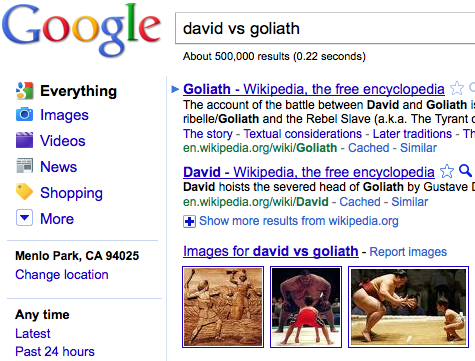
Today we saw that google changed its algo to ‘remove’ content farms like demand media and others. After reading their post I must say that I’m 100% with them on: “…We can’t make a major improvement without affecting rankings for many sites. It has to be that some sites will go up and some will go down. Google depends on the high-quality content created by wonderful websites around the world, and we do have a responsibility to encourage a healthy web ecosystem. Therefore, it is important for high-quality sites to be rewarded, and that’s exactly what this change does.”
Is great as long as it won’t kill start ups (like ours!) that trying to bring the web a new quality content. I’m sure that the last change did great to brands and big companies but as we know, in the web, you want to encourage the ‘David’ and not (only) the ‘Goliath’.
We’ll see…
 It’s now very clear that Chrome Browser got huge adoption (I guess the current numbers of active users is around 100M). In case you didn’t know, Google got now an App store to chrome. They basically, take what Apple showed the world in terms of building an Eco system (apps that you, as developer, can monetize on their platform) and trying to do the same with chrome as platform. It’s very smart idea and soon when we will see the chrome OS on tablets – this will be the way to manage your apps. The main APIs that you might want to use are: Browser actions and Page actions.
Browser Actions – you should use browser actions to put icons in the main Google Chrome toolbar. It’s for actions you wish to add to the browser (not specific page). Here are the main tips in order to use it right:
Page Actions – Page actions represent actions that can be taken on the current page, but that aren’t applicable to all pages. For example: translate content on the page, create something from photos in the page etc’. Here are some samples for both type of extensions.
Now, if you are on a site that you think will make sense to put in an extension (due to it’s nice features)… it’s very easy to do it.
All you need are two main files:
Here are the 2 files that show you how to take HGM mobile app and put it in chrome:
 {

"name": "Great Deals on New Cars",

"version": "0.2",

"description": "Great the best prices on your new car",

"icons": { "128": "app_icon.png" },

"browser_action": {

"default_title": "Great Deals on New Cars",

"default_icon": "deals.png",

"popup": "deals.html"

},

"permissions": [   "http://www.thecarconnection.com/*" ]

}
<!DOCTYPE html>

<html>

<head>

<title>Deals</title>

<meta name="author" content="Ido Green">

</head>

<body>

<iframe src="http://beta.thecarconnection.com/conduit/deals" width="510px" height="700px" border="0px" scrolling="no">

</body>

</html>
After you saved these 2 files in one directory, just go to Chrome and click on ‘Windows’ -> ‘Extensions’. In that page you click on ‘Load unpack extension…’ and point to your directory.
Done.
You should get now a new button and if you click on it you should get something like this:
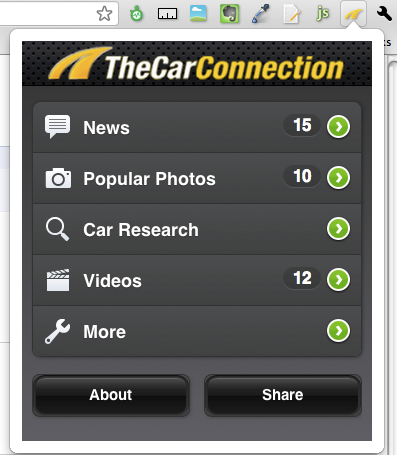
another easy option is to go and download this extension.
Happy Friday/coding.
 I’ve just finish to read this good (very good) book “Fooled By Randomness”. Talab is an ‘old friend’ of mine… since the happy days of “The Black Swan“.
In this book Talab describe the idea that modern humans are often unaware of the very existence of randomness. They tend to explain random outcomes as non-random through ‘scientific’ data analysis. This over-indulgence on data is not only detrimental but also often catastrophic.
The main lessons are powerful and frightening.
* How much can you rely on the track records of companies, advisers, fund managers, newspapers, or even the market as a whole in making decisions about your investment portfolio? Not as much as you probably think (almost not at all).
* As for the Black Swan: A large-impact, hard-to-predict, and rare event beyond the realm of normal expectations. Taleb regards many scientific discoveries as black swans—”undirected” and unpredicted. He gives the rise of the Internet, the personal computer, World War I, as well as the September 11, 2001 attacks as examples of Black Swan events.
* Survivor-ship bias: We see (just!) the winners and “learn” from them, while forgetting the huge unseen cemetery of losers.
* Skewed distributions: Many real life phenomena are not 50:50 bets like tossing a coin, but have various unusual and counter-intuitive distributions. Example: a 99:1 bet where you almost always win, but when you lose you lose all your savings.
* Taleb Distribution: Applied to situations in which there is a high probability of a small gain, and a small probability of a very large loss. If you sold options in your past – this is a good example of such a case. Another way to think about it, is on insurance company – with high probability they are making money until ‘Katerina’ hit New Orleans (small probability) and for some it’s ‘game over’.
In these situations the expected value is (very much) less than zero, but this fact is camouflaged by the appearance of low risk and steady returns.
So you ask what are the main actions? Well, I would think that Talab (like Gladwell) is not reluctant to make decisions base on instinct (=’Blink’) due to the fact that deep analysis is not helpful. As for Black Swan – be aware of them, because they might put you out of your game.
And this is another good one…
“…The best test of whether someone is extremely stupid (or extremely wise) is whether financial and political news makes sense to him.”
 I must tell you it sounds logic now…
But like anything else in life – you can find explanations in retrospective easily. Why MySpace is ‘gone’ and facebook is the hottest place?
Lots of reasons that lots of ‘smart’ people will give you long explanations. I guess there is amount of randomness that drove things but people (specially, when they are lucky) doesn’t want to attribute it to the random nature of things. After all, there are so brilliant that it must be something they did. On the other hand, if you fail, then it’s randomness/luck or anything else that take the blame from them.
After thing long intro, here you go for 3min on the three things that were ‘keys’ to Facebook success:
As you can tell, I don’t buy it.

It’s an old talk I’ve saw in TED.com few years ago…
However, after a long discussion with someone that love to argue (yes – there are few people like these around down town Palo Alto). I took the time to put this on a page so I could email him (and others in the future). It’s hard to accept the facts that the data put in front of us.
Steven Levitt revile to us, quite annoying fact: “car seats do not outperform regular seat belts for children ages 2 and up”.
Think how much time and money we spend on these seats, thinking that they will help our little ones in case of an accident.
Here are some data from MotionX-GPS on the iPhone. As you can see, we eat lunch on the lift.
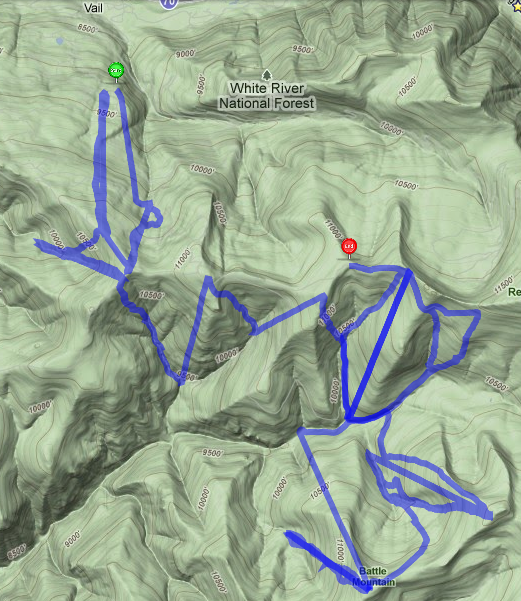
A Day in Vail (Click to See)
| Name: | Vail powder 2 | |
| Date: | Jan 24, 2011 8:35 am | |
| Map: (valid until Jul 23, 2011) |
View on Map | |
| Distance: | 73.9 kilometers | |
| Elapsed Time: | 5:43:22 | |
| Avg Speed: | 12.9 km/h | |
| Max Speed: | 57.4 km/h | |
| Avg Pace: | 04′ 39″ per km | |
| Min Altitude: | 2,218 m | |
| Max Altitude: | 3,520 m | |
| Start Time: | 2011-01-24T15:35:06Z | |
| Start Location: | ||
| Latitude: | 39.629375º N | |
| Longitude: | 106.372174º W | |
| End Location: | ||
| Latitude: | 39.606094º N | |
| Longitude: | 106.332164º W | |
This year we had really poor camera men… but still the editor of the video did his best.
and a good place for next year:
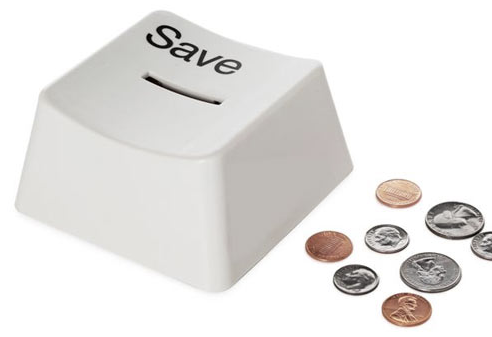 I’ve read last night this great quote: “…On a longer-term basis, central banks and policy makers are really trying to take money from someone, or some class of asset holders, and give it to someone else. The asset-class holder under attack is the saver. This is the framework that has been created by policy makers trying to re-balance the imbalances of the past 20 to 30 years. To put it bluntly, they are robbing savers and taking money surreptitiously from longer-term asset holders whose assets don’t anticipate future inflation.”
Yes, as hard and harsh as it sounds, this is the current world we live in.
Monetary inflation robs savers. It’s a hidden tax.
When the rate of inflation is higher than the rate being earned on short-term deposits, the deposit holder is losing money on a “real” basis (= inflation). Most insidious of all, monetary inflation is a tax that takes its largest toll on those who can least afford it — the poor and elderly.
These are the people who tend to have a larger percentage of their assets tied up in cash and short-term deposits, which are steadily being eroded in value.
Sad? Right?
One way to ‘fight’ this is to have a balanced portfolio that gives you assets that will resist the inflation. However, it’s a skill that the ‘normal’ saver is not harness with. I do hope the in the future we will see different Banks (many be something like: Simple Bank ?) that will give the savers some kind of peace with more balance products that will ‘save’ them from inflation.


