
Are you looking for Espresso Labs? (Espresso Labs combines intelligent agents with expert-crafted playbooks to deliver comprehensive, white-glove IT and cybersecurity.)
If not… this is the place to tune your espresso machine:
How to Tune Your Breville Espresso Like a Pro ☕️
This started, as many great engineering projects do, with frustration.
I had a shiny Breville espresso machine on my counter. I had good beans. I had YouTube confidence. And yet… the espresso tasted like hot regret.
Sometimes sour.
Sometimes bitter.
Occasionally both, which feels rude.
So I did what any reasonable technologist does when a system behaves unpredictably: I stopped random tweaking and started debugging.
This post is about tuning (aka dialing in) a Breville espresso machine in a way that appeals to builders, tinkerers, and people who secretly enjoy turning knobs while pretending it’s science. It’s practical, repeatable, and yes — mildly obsessive.
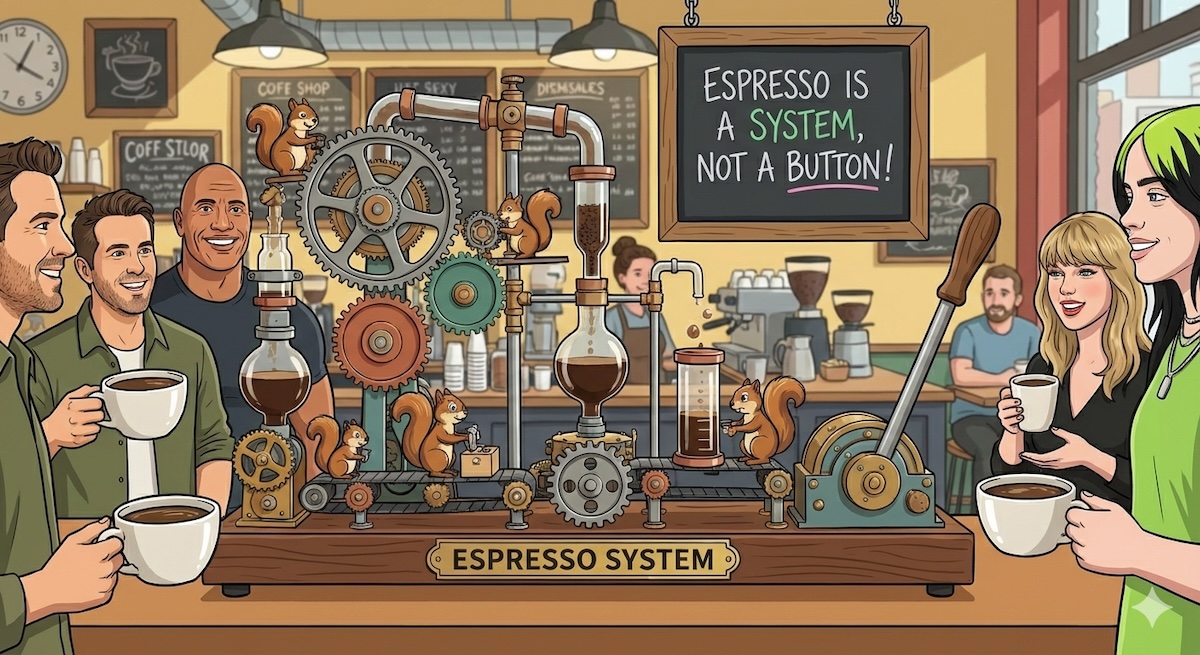
First: Espresso Is a System, Not a Button
Breville machines are marketed like magic boxes. Press here, receive joy. Reality is messier. Espresso is a tightly coupled system with four dominant variables:
- Grind size
- Dose (coffee in)
- Yield (espresso out)
- Time
Change one, and the others notice. Ignore that, and you’ll spend weeks blaming the machine, the beans, or fate.
Think of dialing in like tuning a distributed system under load. You don’t change ten configs at once and hope. You change one thing, observe, log, repeat.
The Baseline (Your Control Group)
Before touching anything fancy, establish a boring, sane baseline:
- Dose: 18–20g of coffee
- Yield: ~36–40g espresso (1:2 ratio)
- Time: 25–35 seconds
- Beans: Fresh (not from the Clinton administration)
Use a scale. Yes, a scale. Measuring espresso by vibes is how wars start.
Once you can reliably hit this window, then you’re tuning. Before that, you’re guessing.
The Grinder Is the Boss
Here’s the uncomfortable truth: grind size matters more than almost anything else.
If your shot gushes out in 10 seconds — grind finer.
If it drips like a broken faucet and tastes angry — grind coarser.
On Breville machines with built‑in grinders:
- Use the external grind dial for day‑to‑day tuning
- Use the internal burr adjustment only if you’ve hit the limits
Internal burr adjustment feels like a cheat code. Use it carefully. Small moves. One click. Then test.
Tamping: Boring, Important, Unforgiving
Tamping is not about strength. It’s about consistency and levelness.
You are not trying to compress coal into diamonds. You’re trying to create an even puck so water doesn’t channel like it found a shortcut.
Same pressure. Every time. Flat surface. No drama.
Taste Is the Final Metric (Sorry, Graph Lovers)
Numbers get you close. Taste decides.
- Sour: under‑extracted → grind finer or extract longer
- Bitter: over‑extracted → grind coarser or shorten
- Flat: stale beans or wrong ratio
If it tastes good but breaks a “rule,” congratulations — you won.
Top 5 Tips for Tuning Over Time
1. Change One Variable. Log Everything.
Treat this like an experiment. Adjust one thing, pull a shot, write it down. Your memory lies. Notes don’t.
2. Use a Scale Forever
Even after you’re good. Especially after you’re confident. Consistency beats intuition.
3. Dial In Per Bean, Not Per Machine
New beans = new tuning. This isn’t failure. It’s physics.
4. Don’t Chase Perfection Daily
Temperature, humidity, bean age — they all drift. Aim for great most days, not flawless always.
5. Re‑Test Weekly (or When It Tastes Off)
Once a week, pull a reference shot and sanity‑check time, yield, and taste. Espresso drifts slowly, then all at once.
How I Test Over Time
- Pick one bean and lock it in for a week
- Dial in on day one
- Each morning: pull shot, note time + taste
- If two bad shots in a row → adjust grind slightly
- Reset baseline when beans change
This takes minutes and saves hours of rage.
Common Failure Modes (And How to Fix Them Without Panicking)
Espresso failure is rarely mysterious. It just feels personal. Here’s the quick diagnostic table your future self will thank you for.
Sour (sharp, lemony, makes your jaw tense):
This is classic under‑extraction. Water didn’t have enough time to do its job.
Fix it by grinding a bit finer, increasing extraction time, or slightly increasing yield. Don’t touch five things at once — pick one and test.
Bitter (harsh, dry, lingering like a bad meeting):
That’s over‑extraction. You pulled too much from the grounds.
Fix it by grinding a touch coarser, shortening the shot, or reducing yield. If bitterness shows up late in the sip, stop the shot earlier.
Flat or Hollow (technically coffee, emotionally disappointing):
Usually stale beans, wrong ratio, or both.
Fix it by using fresher beans, tightening your ratio back toward 1:2, and checking dose consistency. No grinder tweak can resurrect dead beans.
If it tastes almost good, you’re one small adjustment away. Espresso rewards patience, not heroics.
Final Thought
Breville machines are capable of excellent espresso. The gap between “meh” and “wow” isn’t money or gear — it’s method.
Dialing in espresso turns coffee from a button‑press into a craft. A tiny, delicious, caffeine‑powered systems‑engineering problem.
And once you solve it, you’ll never look at a bad café espresso the same way again.
Be strong and have a good/strong espresso ☕

 Ido Green