life

Factfulness – Book Review

It’s one of the best books I read during 2018. 

Hans Rosling was a great author (and a speaker) and he expressed his ideas in a very clear way. One of the great things that open this book, is the test that he gives you at the beginning. It comes to prove you, how little you know about the world we live in. It drives the point home very clearly.

Don’t believe?

Try it for yourself:

Continue reading
Standard
life

The Emperor of All Maladies

I’ve just finished this interesting book on the biography of cancer. On one hand, it’s a depressing story, as we are still losing many battles.
On the other hand, there are many ways that progress have been made and hopefully, we are in a phase (e.g. genomics research and the cost reduction in analyzing DNA) that will bring us more victories. It is a story about the  history of research with eureka moments and decades of despair.

The author, Dr Mukherjee does a great job in describing the history from its first documented appearances thousands of years ago (when the Greek historian Herodotus records the story of Atossa the queen of Persia and the daughter of Cyrus, who noticed a lump in her breast.) through the progress in the twentieth century to cure, control, and conquer it to a radical new understanding of its essence. 

I found somewhere this encouraging answer he gave to the question “With all that you have learned up to this point, are you hopeful in terms of cancer research and possible cures?”
Mukherjee: “I feel pathologically hopeful!
The opposite of hopeful is hopeless.
How can you be hopeless?
Discoveries have occurred, and discoveries are occurring.
Look at history, does that mean that every move becomes the most brilliant discovery or the universal cure for cancer? No.
But history clearly shows a track record of progress. Medicine is caught in this moment of pulling out from a sea of uncertainty these little pieces that are more certain than others. I often tell fellows and residents, to me there is no discipline we practice as human beings that manage this level of complexity. Not just statistical or scientific complexity, but emotional complexity. That’s what makes it one of the most unbelievably moving professions that exist.”


Standard
life

How to Be Happy Without Getting Lucky

Perfect spot for thinking and breathing

A perfect spot for thinking and breathing


All the great ideas here are from @Naval
I just edit it so I could comeback and read it from time to time.

1. Seek wealth, not money or status.

Wealth is having assets that earn while you sleep.
Money is how we transfer time and wealth.
Status is your place in the social hierarchy.‏

2. Understand that ethical wealth creation is possible.
If you secretly despise wealth, it will elude you.‏

3. Ignore people playing status games.
They gain status by attacking people playing wealth creation games.‏ Continue reading

Standard
Business, life

(Try to) Make Better Decisions

The lake and clouds near HWY 92&280

Thanks to @farnamstreet for these great points that he posted on Twitter. It reminded me of a good conversation with a friend about the ‘right’ and a ‘good’ decision.

A good decision is the best one you can make based on the evidence at hand when you need to decide. Only time can tell if it will be the ‘right’ one. By the way, it is good to remember that many decisions are reversible. With those types of decisions, you can use a lightweight process. You don’t have to live with the consequences for that long if you can change it (which is easy to say and hard to do).

You should improve your skills to recognize quickly that a decision is wrong. When you become good at course correction, you can ‘fail quickly and move forward fast. If you wish to improve and increase the odds of good decisions that turn out on the right side, here is a list of rules to help with the process.

How to make a better decision?

Continue reading

Standard
JavaScript, life

The Monty Hall Problem

The Monty Hall problem is a brain teaser loosely based on the American television game show “Let’s Make a Deal” and named after its original host, Monty Hall.

I wrote a little web app that show you what is the right choice with a simulator. It’s a bit hard to explain the correct solution as it’s going against ‘common’ sense. Continue reading

Standard
life

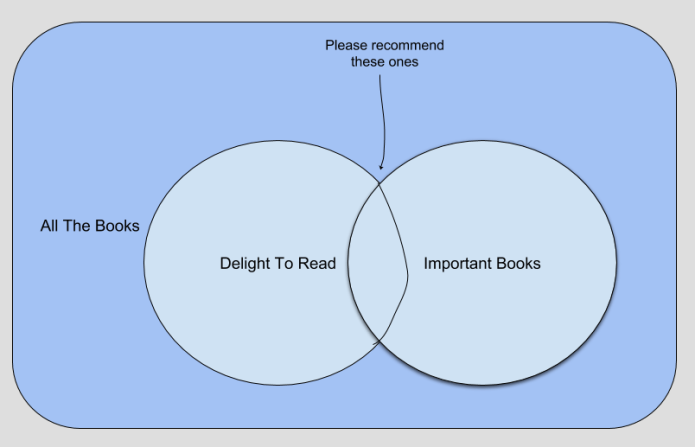
Important Books That Are Delight To Read

books we love

There are around 130 million books around the world.

Let’s say that you can read 2 books a week. In a year, you will be able to read ~100 books and if you keep this pace for the next 80-90 years you have a chance to read ~9000 books which is only 0.007% from the total amount.

So a good question would be:

Which books would you choose to read?

I am collecting suggestions, so please feel free to share.

Btw, If you wish to understand why your kids are hooked on Fortnite? check The Hunger Games, by Suzanne Collins. I’m still amazed how Epic game (the company the behind Fortnite) took so many great ideas from these books and baked them into the game.

Want a few more that I really enjoyed?

  • Wish to laugh?
    • Born a Crime, by Trevor Noah
    • Yes please! by Amy Poehler
  • Think?
    • Outliers, by Malcolm Gladwell
    • Where Good Ideas Come from, by Steven Johnson
  • Learn about health and the cutting edge of our knowledge about cancer?
    • The Emperor of All Maladies and The Gene: An Intimate History both by Mukherjee Siddhartha
  • Learn (more) about great thinkers?
    • Einstein or Leonardo da Vinci or Steve Jobs, by Walter Isaacson
    • Shoe Dog: A Memoir by the Creator of Nike, by Phil Knight
    • Homo Deus: A Brief History of Tomorrow and Sapiens: A Brief History of Humankind and 21 lessons for the 21st centery by Yuval Noah Harari

Standard
life

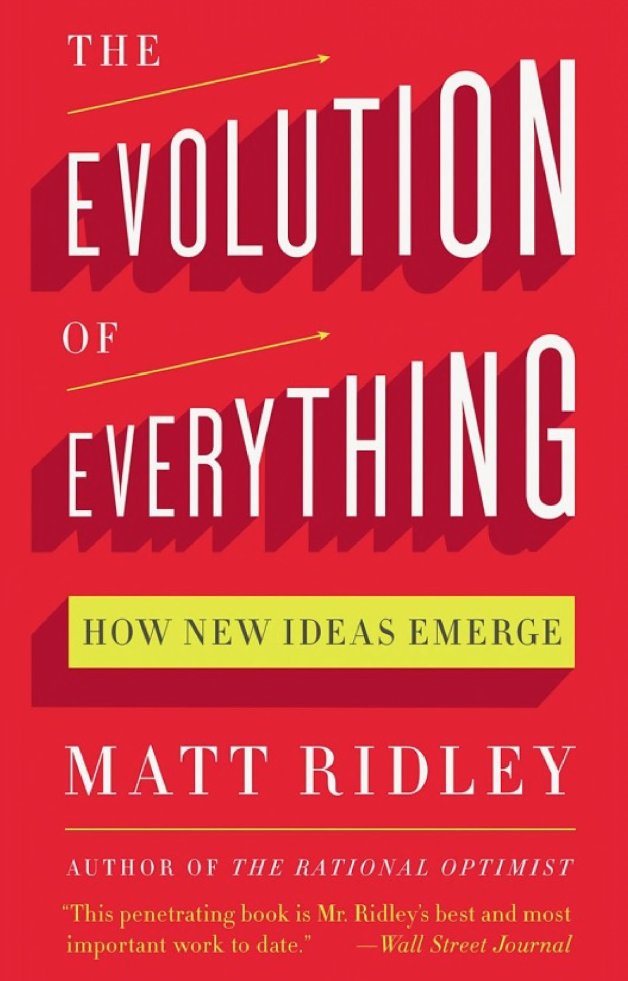
The Evolution of Everything – Book Review

the evolution of everythingLast week I finished an interesting book by Matt Ridley (the author of several good books on genetics and evolution) – “The Evolution of Everything”.

The main idea from the book is simple, yet to many people disturbing: government, technology, society, religion and other areas evolves without any real control over the process. Although we neglect and ignore them, bottom-up trends shape the world in many aspects. Continue reading

Standard
Business, life

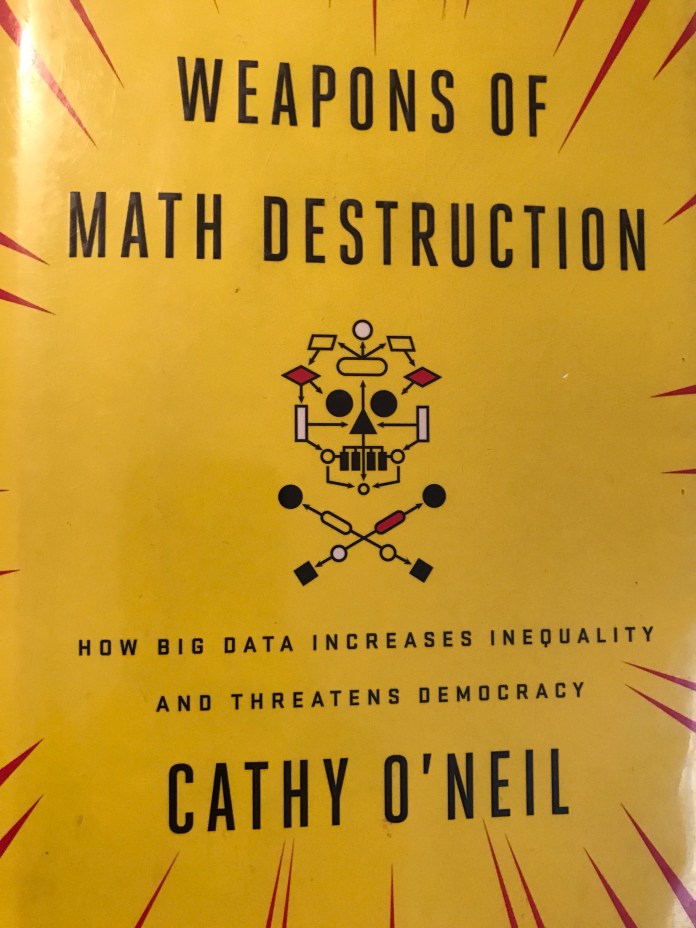
Weapons Of Math Destructions

Weapons Of Math Destructions book


I have just finished this book “Weapons Of Math Destructions” by Cathy O’neil.

It’s an important book that deal with mathematical algorithms and models that control our modern life and where they threat to change many aspects of our social interactions. Think about cases like who is being selected to a certain collage and all the implications. She gives good stories and background to each example in the book.

To me, the bottom line is a call to developers, product managers, scientists (and anyone else who contribute to the creation of these systems) to take more responsibility when they building algorithms. I know it’s a real challenging aspect, as most people are not even aware to the tendencies that they got and influence their decisions. It’s also a call for the regulators to think and ask the hard questions about modern ‘AI‘ systems.

Overall, it’s a good book that is full with good stories and examples that drive her main points about the dark side of big data.

Give it a try.

You might like it as much as I did.

Standard
Business, life

Good Podcasts

headset with colors in the backgroundYesterday I had an interesting conversation with a friend about ways to improve your knowledge in different topics.

I suggested to him to leverage his long commute or runs to listen to audio books and podcasts. I have been doing it over the last 15 years and it’s a great way for me to utilize time better. Suddenly the long runs become interesting and time flies. So his next question was what are the podcasts I like and why.

Here are the top ones:

  • Revisionist History is my favorite one. Gladwell does what he is excelling at… telling a story you think you knew but turn it on its head and during this process teach you a thing or two. In the last two seasons, Gladwell went back and reinterpret something from the past: an event, a person, an idea. Something overlooked. Something misunderstood. The one on Martin Luther King is fascinating.
  • Freakonomics is an award-winning podcast with a lot of listeners (which most, I suspect, like logic, economic etc’). Stephen Dubner has conversations that explore the riddles of everyday life and the weird wrinkles of human nature — from cheating and crime to parenting and sports. Dubner talks with Nobel laureates and provocateurs, social scientists and entrepreneurs — and his Freakonomics co-author Steve Levitt. The last few episodes (as of March 2018) about CEOs are really good. Check it out.
  • Here’s the thing with Alec Baldwin – Alec really knows how to interview his impressive guests and listen to their ideas and stories. It’s great to follow him and learn about people that changed history, industries or ‘just’ put a smile on our faces.
  • Epicenter – I’ve been passion about the crypto world since 2012. Around early 2014 I found this one. It’s a podcast that takes you to the heart of this important technological revolution: the rise of decentralized technologies. Every week, they bring conversations with some of the brightest minds in this bourgeoning ecosystem of startups and open source projects. Good stuff if you want to learn more about decentralized technologies and the crypto world.
    Btw, Block Zero is a new podcast that deal with this topic as well. It’s still young but sounds good so far.
  • The Moth – The Moth Podcast features stories that are being recorded live on stage around the USA.
    Some of them are really good! Episodes are released every Tuesday.

Continue reading

Standard
life

Two Books On World War II

2 books

I don’t know why, but in the past month I read (again) two books that tell personal stories during World War II / holocaust.

I didn’t plan it. But like most things in life, while we are making plans, things happen.

In retrospective, it was a powerful, sad and interesting time. You can hear a lot of stories about WW2 and the holocaust but there are some that hit you right in your heart.

As the say, “Long story short”, here are the two books I recommend.

The Nightingale

Kristin Hannah is so talented. She does a great job in capturing an intimate part of history from a unique perspective: the women’s war. It is a combination of two stories or two sisters. They are separated on many levels: years, experience, ideals and mostly character. Each one is paving her own path toward survival in German-occupied France. It’s a beautiful, sad story that shows the real strong gender – female.


Beneath a Scarlet Sky

It’s a real personal story of Pino Lella, a young Italian teenager who wants to ski and have fun. Up to here it’s just like any teenager who lives near the amazing mountains in north of Italy. But, there is a war and he started it by joining the underground where he helped Jews escape over the Alps to Switzerland. From one step to another he become the personal driver of Hans Layers who reported to Hitler. The story tells how is manage to spy for the allies and his relationships with Hans, Anna (his love) and his family. During the book, you keep thinking it can’t be a real story. But, you keep realizing, it is all happen in Europe only 60 years ago.


Standard