
This looks real… but it’s still unbelievable.A world record in ski jumping (and stupidity) in the same time.
I wonder who such a ‘pro’ can get things so wrong. life…
This looks real… but it’s still unbelievable.A world record in ski jumping (and stupidity) in the same time.
I wonder who such a ‘pro’ can get things so wrong. life…
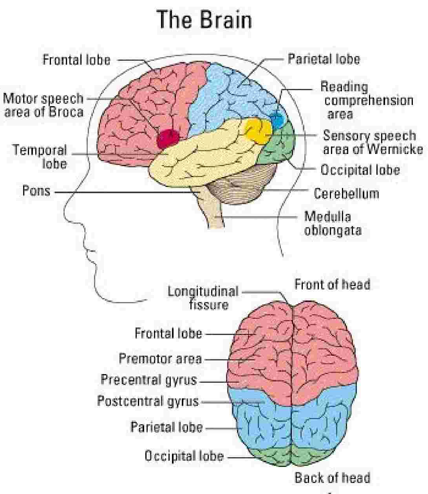
The Brain Main Sections
Here is a short paper I’ve wrote to one of the course that I took in Stanford Continuing Studies. It’s not a nice picture (literally – you can check at the bottom of this post), but it seems that there are few things we can do.
Dementia is a chronic deterioration of intellectual function and other cognitive skills severe enough to interface with the ability to perform activities of daily living1. It is not a single disease, but a syndrome and more than one type can exist at any one time. It is a known fact that in developed countries, prevalence is 1.5% at age 65 and doubling every 4 years after that age up to 30% at age 80 it is therefor important to search for ways to improve our brain ability to postponed or co-op with these facts.
A recently published report2, funded by the National Institutes of Health, reviews extensive literature on cognitive decline and Alzheimer’s disease in search of factors that might delay or prevent these age-related conditions. Of all the factors reviewed, including diet and dietary supplements, physical exercise, social engagement, and other leisure activities, only cognitive training was found to have a high level of evidence for being associated with a decreased risk of cognitive decline. So, if one wants to engage in activities that are known to be associated with a reduced risk of cognitive decline, this report says that cognitive training is the way to do so efficiently. Training with cognitive exercises can improve targeted mental functions, conclude the authors of a review article published recently in the journal Alzheimer’s and Dementia. The authors3 reviewed ten randomized controlled trials involving cognitive training interventions in healthy adults published since 1992. They found that specific abilities such as memory, reasoning, and speed of processing can be improved through targeted training programs. This is an important conclusion, and it is consistent with the growing evidence in support of the effectiveness of cognitive training.
The authors point out that the benefits of cognitive training tends to be specific to the trained domain. If one wants improved memory — train on games designed to improve memory will get results. If one wants an improved attention — train with attention games4, and so on. It is also clear from this review that there is still a lot that we don’t know. Few of the studies have follow-up testing longer than a few months, and many of them lack measures of real-world benefits such as activities of daily living. However, where longer follow-ups and real-world benefits are measured, benefits are seen to be long lasting and quite general. For example, in the active study of cognitive training in normal healthy older adults, benefits to activities of daily living are seen five years after the training intervention ended. While there is still much to learn, the weight of the evidence is showing that cognitive training can be highly effective when properly designed and executed.
There is some new evidence that Alzheimer’s disease is much more likely for people whose parents both have the neurodegenerative disorder than if only one parent has it5. Researchers examined families in which both parents have Alzheimer’s, and found that their children ended up with the disease 42% of the time. This finding supports the evidence that genes play an important role in determining whether you end up with Alzheimer’s. One of the genetic components responsible for the disease is known as the gene Apolipoprotein E (ApoE). Fortunately one’s genes do not entirely determine one’s fate. One’s lifestyle is important too, and although we do not have control on our genetic makeup, we can control how we live. The incidence of Alzheimer’s increases with age, and is typically diagnosed after the age of 65. By then, there’s not much one can do to slow the disease.
I’ve researched some of the most popular apps stores (Apple6, Andriod7 and Palm8) and found that there are many types of apps that can help one improve specific skill (e.g. speed of processing, memory, attention etc’) but if one wish to start ‘training’ one’s brain on a daily bases in order to prepare for a better future, there are few apps that try to do it more scientifically.
One good example is Lumosity9. This company design their game in order to make sure it will cover all the different cognitive functions one want to target. For instance: speed of processing, memory, attention, flexibility, and problem solving. It’s giving you a complete solution that seems good both in terms of efficiency (time spent vs improvements in skills) and in a motivation aspects (play against your personal record and/or friends etc’).
In the graph above you can see that older users started off at lower BPI10 levels than younger users, but all age groups improved a lot over 1000 games. While initial performance was strongest (on average) in the 18-39 year old cohort, the other groups easily surpass this group’s initial performance after substantial training. After 1000 training games, the average 60-89 year old was performing 44% better than the average 18-39 year old was before training.
In my humble opinion, it is clear from the current research that we still don’t know much. and there is much more to explore. However, it shows that with the proper cognitive training11, physical exercise12, and positive attitude toward life, one can better buffer their brain from later years of cognitive decline and delay the risk of dementia. It seems that we should engage in mentally stimulating activity, on a routine basis, as a way of reducing the risk of dementia. Today, with the growing power of mobile devices that harness us with options to transform ‘dead time’ (e.g. Standing in the line in the post office) to an useful one. We should recommend people to play less Angry birds13 and do more ‘brain training’.
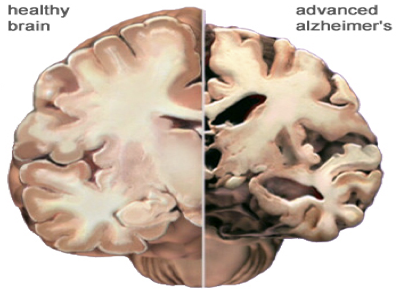
What Alzheimer does to your Brain
As always, comments are most welcome.
Salman Khan (yep – this is the hedge fund analyst we are talking about here) is the founder and faculty of the Khan Academy
Here is a talk he gave last week at TED 2011… enjoy.
I hope to have time in the next tow months to take some videos and translate them.
Here is another great video that show what is about and why Bill Gates is funding parts of it.
 We’ve launched TheCarConnection.com today (after 3 weeks of beta testing for selective users). It was after few months of thinking, listening, designing and building a completely new set of make-model pages that we believe bring you the best automotive experience you can find on the web.We made sure it will be optimize to tablets (e.g. iPad or if you like the iPad2) and all the leading browsers.
Unlike all the other ‘car sites’ – we are bring you all the information from around the web into one place. This way, it’s not only our editors opinion that you get (and might like or not) – but also a wide range of other leading sources/editors and opinions. It is a great tool to get all the best information on each car in one (very nice) place. Your savvy editors not only driving the cars but doing the extra mile and doing the ‘leg work’ for you by bring you the ‘bottom line’ review with all the thoughts about this specific car.
For example, if you are into the new F-150, you can get our ‘Ford F150 2011 executive summary review‘ or read more deeply on all the different aspects of this new model. Want to check out what Edmund/Kbb/Cars are thinking? no worries – just go to our ‘web buzz’ and get all the reviews (more then 300), Q&A (more then 2000!) and tweets.
Here are some examples of the new car reviews:
If you want to know what is the a good price or even great price for the new Volt. You have it in our very cool graphs.
It’s a great tool to use and come prepare for your visit in the dealership 😉
For all the ones that want to buy a used car – we have more then 4,500,000 used car listings, so you could find something in the right area,color,look and feel.
Last but not least, if you got a question or you want to share your knowledge. Check out the new ‘stack-overflow’ for cars. As always, comments are most welcome! Feel free to use our official TCC twitter.
Here is a lighting talk (5 min) that I gave more then a year ago in the java posse roundup 2010
and here is the presentation
have fun in the next run…
Can a piece of software change your life?
From the Founder of foursquare. Mr. Crowley, the answer is yes. I liked that he took his ideas from Nike+ (that I’ve used a lot as well). He asking that right question. Can a game change the way people are acting? and how it can help them be better in ‘life’.
It’s a good talk he gave in TEDxEast and I hope that Facebook check-in won’t kill them in the long run.
As we know… it’s all about the driver/rider.
Today we saw that google changed its algo to ‘remove’ content farms like demand media and others. After reading their post I must say that I’m 100% with them on: “…We can’t make a major improvement without affecting rankings for many sites. It has to be that some sites will go up and some will go down. Google depends on the high-quality content created by wonderful websites around the world, and we do have a responsibility to encourage a healthy web ecosystem. Therefore, it is important for high-quality sites to be rewarded, and that’s exactly what this change does.”
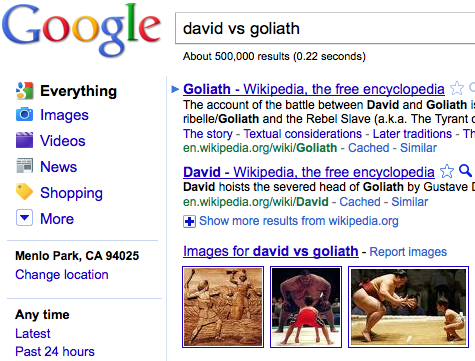
Is great as long as it won’t kill start ups (like ours!) that trying to bring the web a new quality content. I’m sure that the last change did great to brands and big companies but as we know, in the web, you want to encourage the ‘David’ and not (only) the ‘Goliath’.
We’ll see…
 It’s now very clear that Chrome Browser got huge adoption (I guess the current numbers of active users is around 100M). In case you didn’t know, Google got now an App store to chrome. They basically, take what Apple showed the world in terms of building an Eco system (apps that you, as developer, can monetize on their platform) and trying to do the same with chrome as platform. It’s very smart idea and soon when we will see the chrome OS on tablets – this will be the way to manage your apps. The main APIs that you might want to use are: Browser actions and Page actions.
Browser Actions – you should use browser actions to put icons in the main Google Chrome toolbar. It’s for actions you wish to add to the browser (not specific page). Here are the main tips in order to use it right:
Page Actions – Page actions represent actions that can be taken on the current page, but that aren’t applicable to all pages. For example: translate content on the page, create something from photos in the page etc’. Here are some samples for both type of extensions.
Now, if you are on a site that you think will make sense to put in an extension (due to it’s nice features)… it’s very easy to do it.
All you need are two main files:
Here are the 2 files that show you how to take HGM mobile app and put it in chrome:
 {

"name": "Great Deals on New Cars",

"version": "0.2",

"description": "Great the best prices on your new car",

"icons": { "128": "app_icon.png" },

"browser_action": {

"default_title": "Great Deals on New Cars",

"default_icon": "deals.png",

"popup": "deals.html"

},

"permissions": [   "http://www.thecarconnection.com/*" ]

}
<!DOCTYPE html>

<html>

<head>

<title>Deals</title>

<meta name="author" content="Ido Green">

</head>

<body>

<iframe src="http://beta.thecarconnection.com/conduit/deals" width="510px" height="700px" border="0px" scrolling="no">

</body>

</html>
After you saved these 2 files in one directory, just go to Chrome and click on ‘Windows’ -> ‘Extensions’. In that page you click on ‘Load unpack extension…’ and point to your directory.
Done.
You should get now a new button and if you click on it you should get something like this:
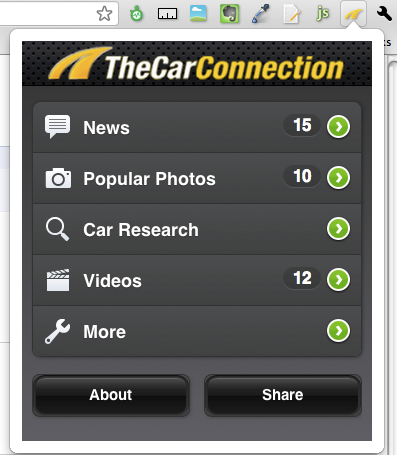
another easy option is to go and download this extension.
Happy Friday/coding.
 Ido Green