
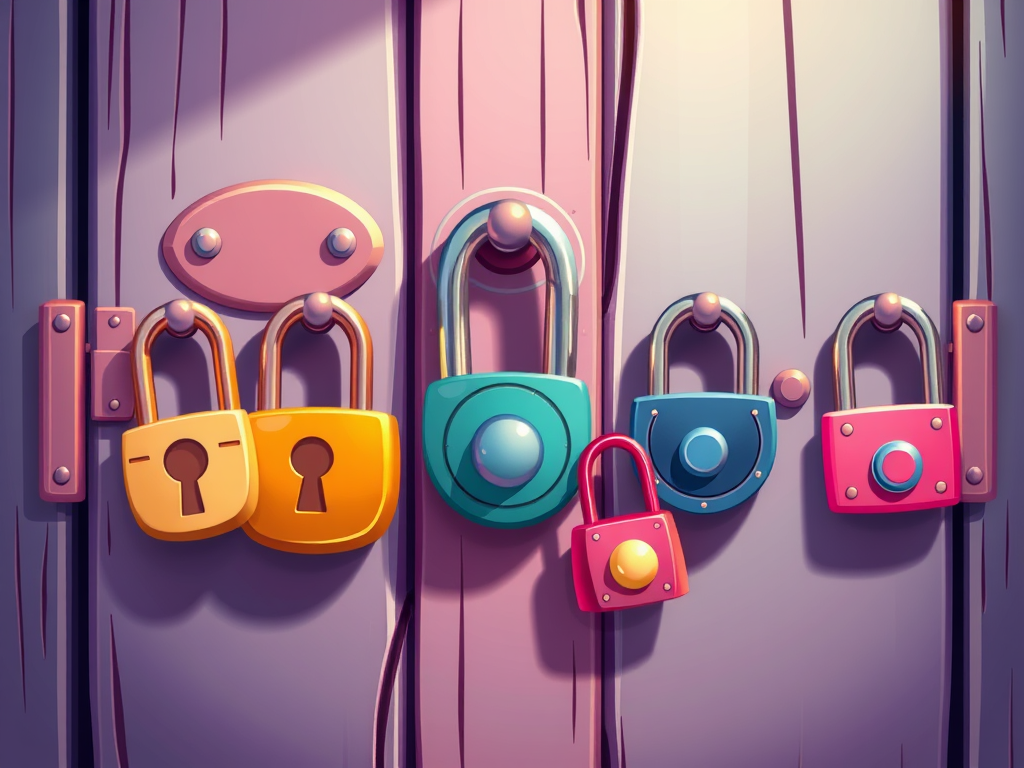
If the Internet were a city, most people would be walking around with their front doors wide open, a neon sign flashing “Help Yourself!”, and a note taped to the fridge that says, “Password is 123”
And then they’re shocked — shocked! — when someone strolls in and steals their stuff.
This is exactly why Multi-Factor Authentication (MFA) exists.
It’s the digital equivalent of adding a deadbolt plus a very grumpy dog who hates strangers.
And yet… people still avoid it.
Too annoying. Too many steps. Too much friction.
…or add here your favorite excuse for not doing something important.
Meanwhile attackers don’t “hack” into accounts — they log in with leaked passwords floating around the dark web like lost socks in a laundromat.
Note to self: I should make t-shirts with the last statement.
Let’s cut the nonsense:
You must enable MFA on every account you own.
All of them.
Your bank. Your Gmail. Your GitHub. Your kid’s Minecraft account. Everything.
Why MFA Isn’t Optional Anymore
A password is flimsy. One data breach from a service you used once in 2014, and that password is suddenly being tried against your bank, Facebook, email, cloud storage, crypto exchange, Netflix…
Hackers don’t guess. They reuse. (=another good t-shirt I should make)
It’s industrialized credential abuse.
MFA breaks that system.
Even if someone has your password, they hit a wall they can’t climb.
This is why almost every major breach — from corporate meltdowns to everyday account takeovers — starts with:
“Attacker logged in using stolen credentials.”
No lasers. No movie hacking montage.
Just: Username. Password. Boom.
Unless you enable MFA.
Use Google or Microsoft as Your Identity Anchor (SSO FTW)
Some people try to manage MFA across 20–70 different websites.
That’s chaos.
There’s a better way:
Put your strongest MFA on Google or Microsoft, then use Single Sign-On (SSO) anywhere that supports it.
Why this matters:
• You centralize security instead of scattering it like digital confetti.
• You get enterprise-grade MFA without paying enterprise-grade prices.
• Losing your phone doesn’t trigger 47 “account recovery” nightmares.
• You sign in faster — one fortified account instead of typing passwords everywhere like it’s 2008.
Turn Google/Microsoft into your fortress.
Everything else becomes a room inside it.
Passkeys: The Future Is Here
Passkeys are the first security upgrade in decades that’s actually less annoying than what came before them.
A passkey replaces your password entirely.
No typing.
No remembering.
No “Was it my dog’s name plus an exclamation mark this time?”
Your device uses cryptography to prove it’s you.
And because the private key never leaves your device:
• A database breach can’t leak your passkey.
• Phishing tricks stop working.
• Password spraying becomes irrelevant.
• Credential stuffing dies instantly.
If a website offers “Sign in with Passkey,” choose it every time.
And when your passkeys sync through Google or Microsoft, you get seamless recovery on new devices without sacrificing security.
This combination — Passkeys + Big Identity Provider — is the closest thing we have to a cheat code for staying safe online.
Real-World Cases That Make the Point Painfully Clear
1. The Startup That Lost Its GitHub
One developer reused a password on a random site.
That site got breached.
Attacker logs in → inserts malicious code → catastrophic week.
With MFA or a passkey, the attacker would’ve hit a locked door.
2. The CEO Who Lost Email For Over A Month
No MFA. Password reused.
Attacker logged in, forwarded email, deleted messages, locked the account.
Recovery required government-level documentation and a patience buffer only monks possess.
3. The Big-Tech Breach You Definitely Remember
A giant company got compromised because an engineer used a recycled password leaked years earlier.
One weak credential cost them hundreds of millions.
A passkey would’ve prevented the entire thing.
The Bottom Line
Turn MFA on everywhere.
Switch to passkeys whenever you see them.
Use Google or Microsoft as your identity backbone with SSO.
Your future self will be thrilled — ideally while not trying to explain to customer support why you apparently logged in from Romania at 3:12 a.m.
Be strong.
Discover more from Ido Green
Subscribe to get the latest posts sent to your email.

